Russian authorities have arrested a Japanese journalist in the far-eastern Sakhalin region on suspicion of espionage, accusing him of gathering information related to Russia's defence capabilities on behalf of Japanese intelligence.
The journalist has been identified as Yuki Imai, a reporter for the Hokkaido Shimbun newspaper based at the outlet's bureau in Yuzhno-Sakhalinsk. He was detained a day before he was due to leave Russia and was subsequently flown to Moscow, where a court ordered he be placed in pre-trial detention until 12 December, pending trial.
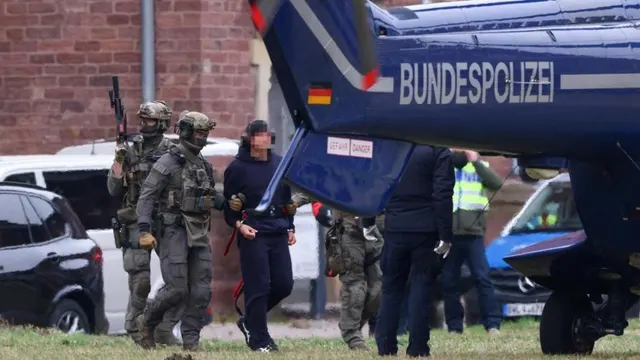
Russia's FSB security agency published footage showing three masked officers in black uniforms storming a hotel room, pushing a man to the floor and handcuffing him. The video then shows the man being escorted onto a plane before appearing in a cage in a Moscow court. The FSB did not specify when the arrest or the court hearing took place.
Russian authorities allege that Imai "acted on the instructions of [Japan's] national intelligence service" to gather information about people involved in military operations on the Kuril Islands. The FSB stated it had opened a criminal case against him. Those convicted of espionage in Russia face up to 20 years in prison.
Russian Foreign Ministry spokeswoman Maria Zakharova identified Imai by name and accused Tokyo of using journalists holding foreign press credentials to undermine Russian security. "Tokyo's attempts to use its correspondents in Russia, who hold foreign journalist status, to gather information aimed at undermining our country's security are regrettable," she said. Zakharova added that "today's incident is not an isolated one," without naming other journalists or outlets allegedly involved.
Japan's government said it was unaware of the arrest until the official announcement was made. Chief Cabinet Secretary Minoru Kihara told a press briefing that Japan had had no contact with the journalist. Japan's foreign ministry urged Moscow to extend "fair and impartial treatment" to Imai, with the Japanese embassy in Moscow and the consulate general in Yuzhno-Sakhalinsk lodging formal requests with Russian authorities for prompt information and humanitarian consideration.
The Hokkaido Shimbun confirmed it was aware of the Russian announcement but said it was "still confirming the details." The newspaper added: "Ensuring the reporter's safety is our top priority."
Imai's published work has covered Russia's relations with North Korea and daily life in Sakhalin.
The arrest comes against a backdrop of sharply deteriorating relations between Tokyo and Moscow. Japan has imposed sanctions on Russia over its invasion of Ukraine in 2022, and Russia has designated Japan an "unfriendly" country as a result. Russia has arrested several nationals of countries it considers unfriendly in recent years, accusing them of working for western intelligence services.
Tensions escalated further in August when Russian President Vladimir Putin visited the disputed Kuril Islands — his first-ever trip to the archipelago. Japanese Prime Minister Sanae Takaichi said the visit "wounded the feelings of the Japanese people" and was "incompatible with Japan's consistent position on the Northern Territories." Moscow dismissed her remarks as "politically inappropriate" and "legally unfounded."
The Kuril Islands have been under Russian control since Soviet forces seized them in the final days of the Second World War, displacing around 17,000 Japanese residents. Japan claims the four southernmost islands, which it calls the Northern Territories. The dispute is the primary reason the two countries never signed a formal peace treaty after the war. In 2022, Moscow scrapped a programme that had allowed former Japanese residents to visit ancestral graves on the islands, citing Tokyo's support for Ukraine.
Last week, Moscow further strained bilateral ties by requesting the extradition of Tomoko Akane, the Japanese president of the International Criminal Court. Akane and other ICC officials have been on Russia's wanted list since 2023, when the court issued an arrest warrant for Putin over alleged war crimes in Ukraine.
The case draws comparisons to that of American journalist Evan Gershkovich, who was arrested in Russia in 2023 on espionage charges and sentenced to 16 years in prison before being released in a prisoner swap in 2024 — described as the largest such exchange since the end of the Cold War. In 2019, an unnamed Japanese journalist from a news agency was detained in Vladivostok on suspicion of attempting to obtain military secrets and was ordered to leave Russia within 72 hours.