Protests have erupted across India following an investigation that raised serious concerns about the integrity of the country's Election Commission. The demonstrations are being led by the youth-led Cockroach Janta Party (CJP), with support from opposition politicians and civil society groups.
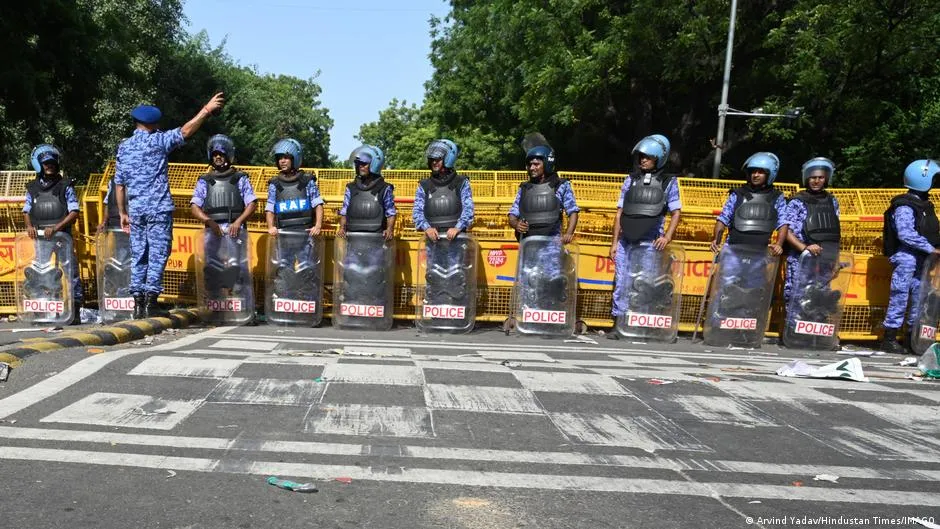
The CJP called for a nationwide march on New Delhi after its ultimatum demanding the resignation of Chief Election Commissioner (CEC) Gyanesh Kumar went unanswered. The march was planned for October 10, with protesters converging on Jantar Mantar, an 18th-century observatory that serves as the Indian capital's designated protest site.
In the days leading up to the march, authorities moved to clamp down on demonstrators gathering at the site. Those arrested included members of the general public, student activists, and opposition leaders, among them Indian National Congress figures Rahul Gandhi and Priyanka Gandhi Vadra.
CJP founder Abhijeet Dipke urged supporters to turn out in large numbers despite the detentions. "The more people you detain, the more people will show up," he said.
At the center of the controversy is an investigation published by the Indian Express newspaper. It revealed that two fellow election commissioners, Sukhbir Singh Sandhu and Vivek Joshi, had raised at least 14 formal objections over a period of 10 months to decisions concerning voter registrations, deletions, restorations, and control of electoral-roll data.
In one of those objections, Sandhu complained that the Election Commission of India had acted against the written advice of the two commissioners, describing its action as "unauthorized and illegal."
Kumar was appointed CEC in 2025 by a selection panel led by Prime Minister Narendra Modi. Rahul Gandhi, who was also a member of the panel, had opposed Kumar's appointment.
Kumar, along with Sandhu and Joshi, is now overseeing the Special Intensive Revision (SIR), a nationwide re-verification of electoral rolls that requires voters to prove their eligibility to remain registered. The Election Commission says the process is designed to remove errors, including the names of deceased individuals, people who have permanently moved abroad, duplicate entries, and the names of foreign illegal immigrants.
Critics argue the process has gone far beyond that stated remit. According to the Indian Express report, more than 130 million names have been removed from electoral rolls across the country. Before the revision, India had approximately 970 million eligible voters.
The CJP is demanding Kumar's resignation and the initiation of criminal proceedings against him, an immediate halt to upcoming elections and a freeze on the SIR process, and the repeal of a 2023 law governing the appointment of election commissioners.
The movement takes its name from a remark made by Chief Justice of India Surya Kant, who referred to unemployed young people as "cockroaches" in an offhand comment during an unrelated court hearing in May. Young people embraced the label and turned it into a vehicle for their frustration over what they describe as failures in the country's education system and widespread youth unemployment.
The CJP has since grown rapidly, amassing nearly 25 million Instagram followers, compared to 9.9 million for Modi's ruling Bharatiya Janata Party. The movement previously gained national prominence through a campaign protesting competitive exam leaks, which resulted in the resignation of then-Education Minister Dharmendra Pradhan.
The CJP is not acting alone. Student activists, civil society members, and former senior government officials have also joined the calls for protest ahead of the October 10 march.
The credibility of the body responsible for running the world's largest democratic elections remains at stake as the demonstrations continue to grow.