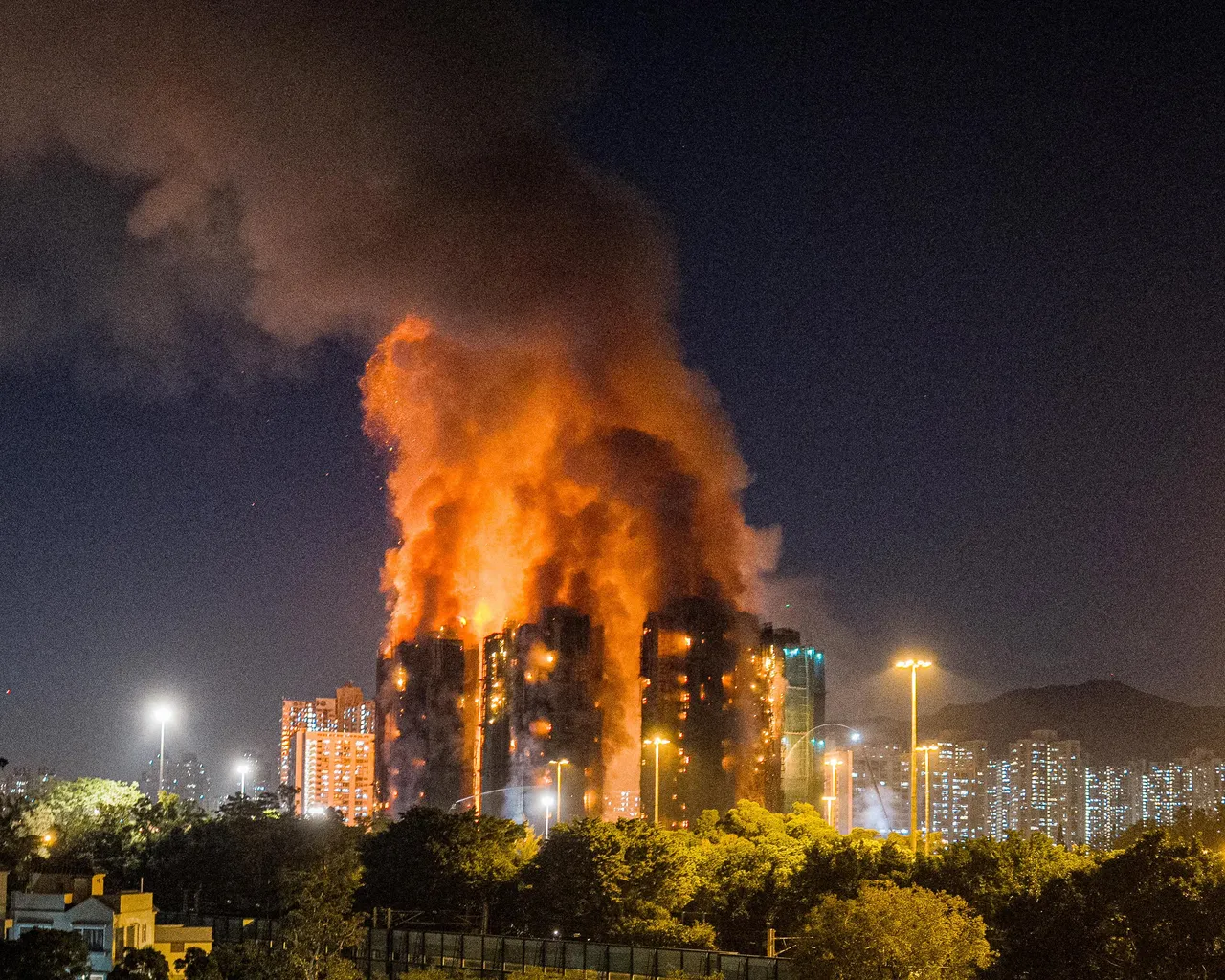
Hong Kong's chief executive John Lee has apologised for government shortcomings that contributed to a fire that killed 168 people, in a rare act of public contrition that some victims' families said fell short of what was needed.
Lee and seven other officials bowed in apology at the release of an independent report that pointed to "decades of failure" by government bodies. Four departments "should bear part of the responsibility" for the high death toll, the report found.
The fire broke out last November at Wang Fuk Court, a residential complex covered in bamboo scaffolding and netting for renovations. A small blaze, likely started by a cigarette, grew into an inferno that engulfed seven of the eight towers in the complex. The disaster has been described as the world's deadliest residential building fire since 1980.
The independent report identified private contractors as the "main culprits" but also accused officials of "lax enforcement." It concluded that had four government departments better recognised the risks and acted accordingly, "there was a real possibility that the misconduct of the private-sector parties and the fire hazards in WF Court could have been rectified or removed before the fire."
Former residents and victims' families had been waiting to learn how the government would address ignored warnings, substandard building materials, and disabled fire alarms that contributed to the scale of the tragedy.
Authorities have filed charges, including manslaughter, against seven individuals and two companies. At least 35 people have been arrested in connection with the fire.
So far, one official has resigned. Housing secretary Winnie Ho stepped down, with Lee stating she should "bear political responsibility."
"I am deeply saddened. I would like to apologise to the affected residents and the general public," Lee said on Thursday.
However, some victims' families rejected the government's response as insufficient. Yip Ka-kui, who lost his wife and home in the fire, told reporters he did not consider the government's acceptance of accountability adequate. "All the secretaries for the departments named should step down," he said. "Administrative responsibility falls short," he added, saying political accountability fell even shorter.
Phyllis Lo, whose mother died in the fire, said progress had been made but that justice had yet to be served. She described the officials' apology as late, though better than nothing.
Lee announced that a three-month investigation into the government's role would now begin. He also promised that authorities had proposed "systematic reforms," including criminalising bid-rigging and overhauling the complaints system. "Similar incidents will never be allowed to happen again," he said.
Some observers had called for a more legally powerful inquiry commission rather than the judge-led independent review committee that produced Thursday's report.
Hong Kong's government has previously faced criticism for being more focused on suppressing dissent than addressing the causes of the disaster. Since a national security law was imposed on the city by Beijing in 2020, civil society groups and political opposition have been largely dismantled.
In the weeks following the fire, authorities warned against crimes that "exploit the tragedy" and reportedly arrested at least three people on sedition charges. China's national security agency in Hong Kong also summoned international media representatives, accusing them of smearing the government in their coverage of the fire.
The independent report concluded with a pointed statement: "The fire has been put out, but the reform has only just begun."


