European and US markets fell sharply on Thursday and Friday as investors assessed the implications of a sweeping Democratic victory in the US midterm elections, with technology and artificial intelligence stocks bearing the brunt of the selloff.
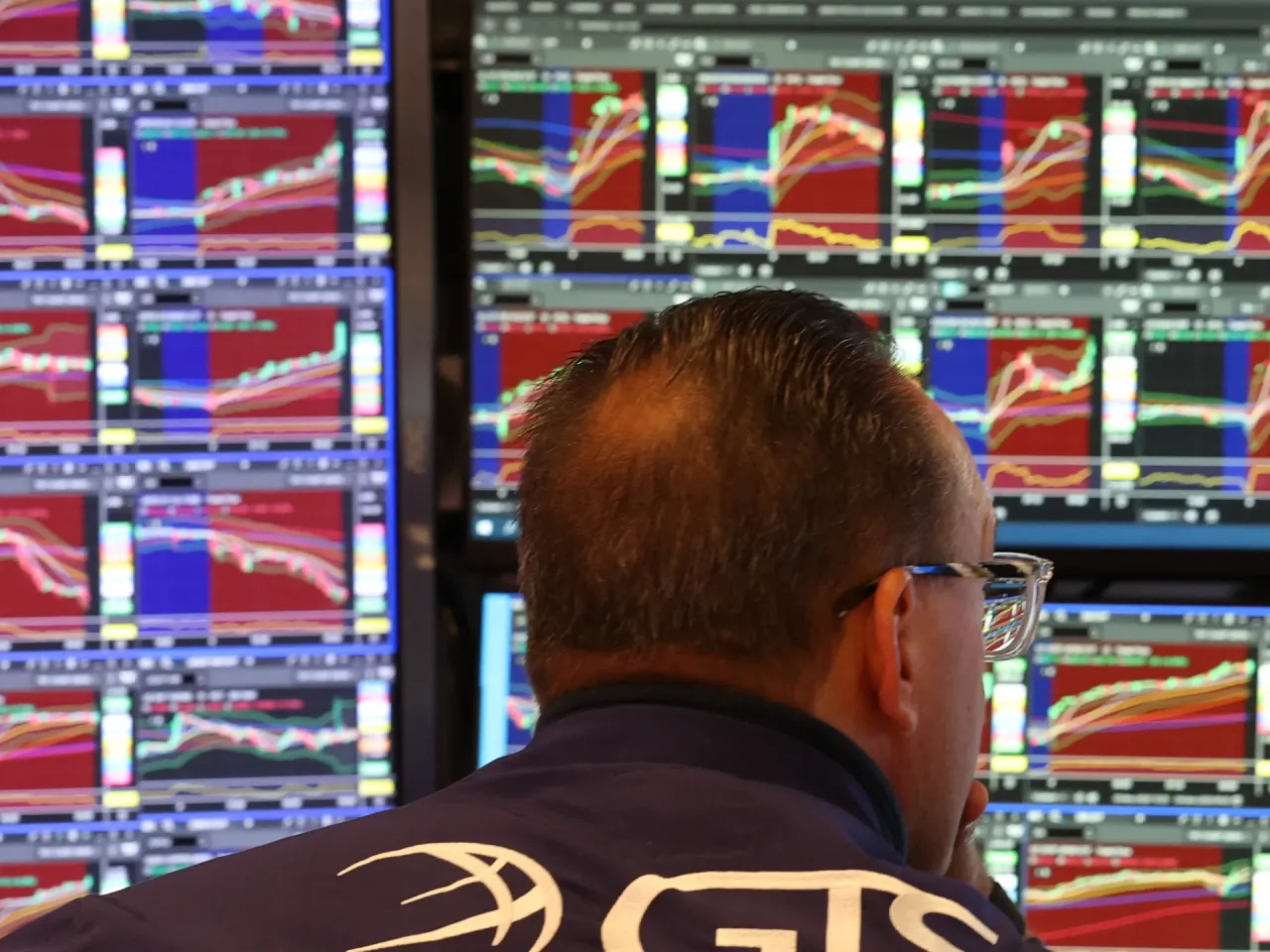
The tech-heavy Nasdaq recorded its steepest single-day drop since US President Donald Trump announced his sweeping tariff campaign on 2 April 2025, a date he dubbed "Liberation Day." The index was down 4.8 percent in midday trading. The S&P 500 fell 3.6 percent, while the Dow Jones Industrial Average slid 2.8 percent.
European benchmark indices also declined as the technology sector dragged broader markets lower.
The selloff was driven largely by fears that the Democratic-controlled Congress could move to restrict the development of AI data centres. Of 45 data centre ballot initiatives held across the country, voters backed restrictions on most of them. According to Data Centers on the Ballot, 39 measures to restrict AI infrastructure passed, while only one — in North Dakota — voted against restrictions.
UBS analysts estimated that potential construction pauses could put roughly 30 percent of planned US data centre capacity additions in 2028 at risk.
AI-related stocks, which have driven much of the market's recent growth, led the decline. Nvidia fell 8.2 percent, Micron dropped nearly 14 percent, and Intel slid 6.8 percent. AI server manufacturer Dell fell nearly 13 percent. Data centre operators also slumped, with CoreWeave down over 12 percent and Nebius Group down nearly 17 percent.
Broader tech giants were also in negative territory. Amazon fell 2 percent, while Meta — parent company of Facebook and Instagram — dropped 3.8 percent.
SpaceX shares fell 9.5 percent, while Tesla dropped over 11 percent. Both companies are owned by billionaire Elon Musk, who spent nearly half a billion dollars backing candidates in the midterm elections. In Texas, where both companies are headquartered, Musk backed candidates who lost their races. He spent $230 million attempting to defeat US Senate candidate James Talarico, $5 million supporting the opponent of Gina Hinojosa in the governor's race, and $500,000 in the lieutenant governor's race, which Democrat Vikki Goodwin won.
Dan Ives, managing partner of Yorkville Ives, said in a note on Thursday that a potential SpaceX and Tesla merger "now faces a much tougher regulatory roadmap to get this deal done in 2027 given this new political blue roadmap in DC/Texas."
Markets had initially rallied on Wednesday, the day after the election, as the Democratic sweep was seen as limiting policy shocks from a Congress at odds with the White House. Investors were also reassured by Trump's remarks that he would accept the election results.
The mood shifted sharply by Thursday, however, as analysts began examining the longer-term implications for the technology sector.
"Yesterday, markets rallied on certainty as election results removed a layer of uncertainty. Today, portfolio managers and analysts are digging into the implications and adjusting expectations for potential political resistance to AI infrastructure, particularly at the state and local levels," said Michael Monaghan, portfolio manager of Founders 100 ETF. "We're seeing that concern reflected in the selloff across semiconductors and hyperscalers."
Ipek Ozkardeskaya, senior analyst at Swissquote Bank, described the broader market movement as a rotation. "It's really a story of a rotation happening from technology to non-technology and from the US to non-US markets as a result of the midterm elections and the very aggressive Democratic sweep," she said.
Gold prices rose amid the uncertainty. Spot gold jumped just over one percent to $4,115 per ounce, hitting a two-week high as investors sought safer assets.