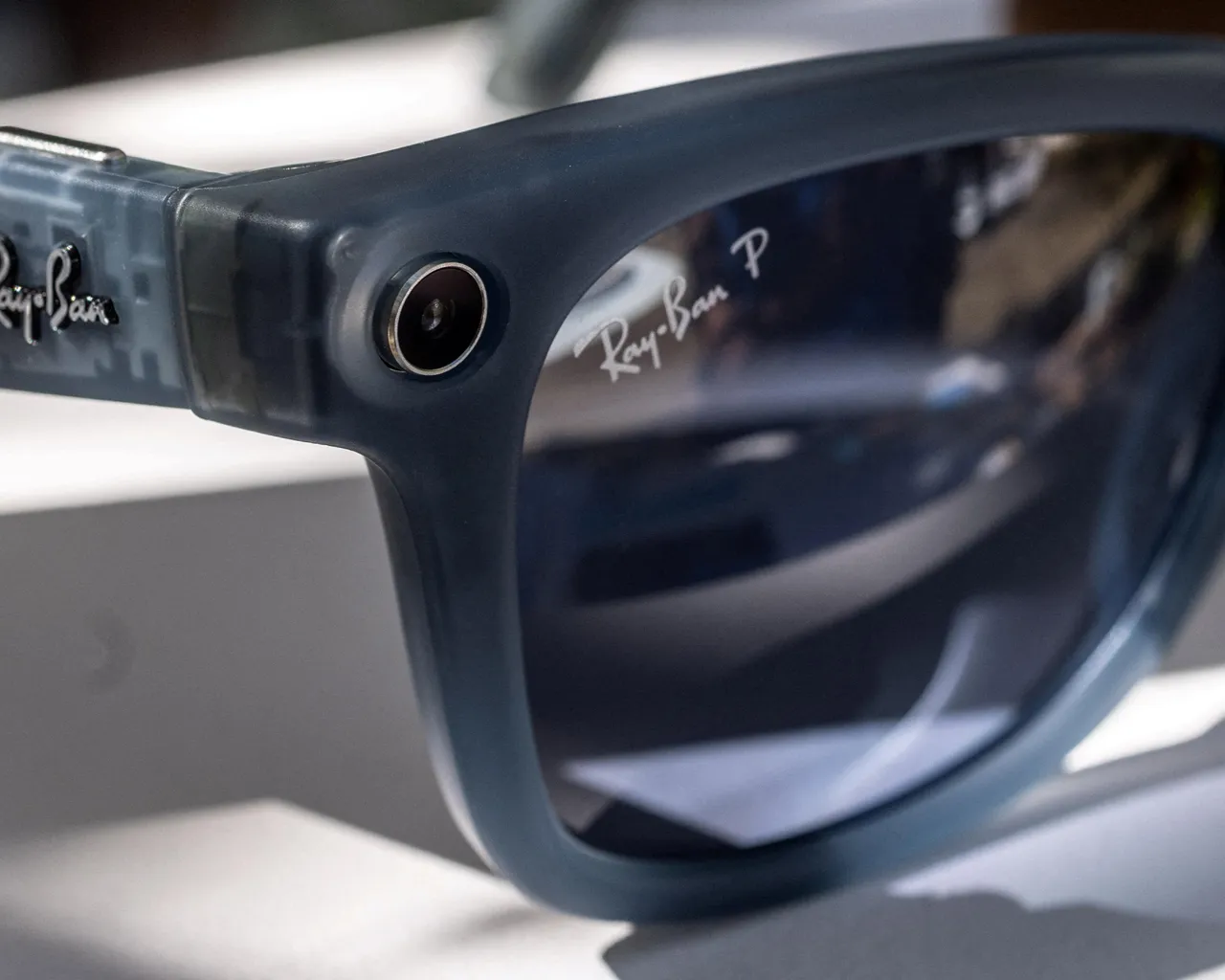
The Australian government is weighing a potential ban on smart glasses in federal offices and service centres, as local councils across the country move to restrict the technology in public spaces over privacy and security concerns.
Public Service Minister Katy Gallagher said on Thursday she had asked the Australian Public Service for advice on whether the camera-equipped glasses should be prohibited in Commonwealth-run workplaces, which range from bureaucrats' offices to Centrelink service centres and CSIRO laboratories.
"We need clear and consistent guidance for public servants," Gallagher said. "Smart glasses can raise legitimate privacy and security concerns, particularly because of their ability to record and capture information."
The Albanese government said it was seeking to set a world-leading standard. No national government has yet banned the use of smart glasses across its agencies.
Courts in England and Wales and in New York state have already banned the technology. The US Immigration and Customs Enforcement agency reportedly classified smart glasses as body-worn cameras and barred them from the federal workspace.
In Australia, a growing number of local councils have introduced targeted bans. Brisbane city council was the first to prohibit the glasses from public pools in August. Melbourne's Yarra city council has banned them from playgrounds, childcare centres and gyms. The City of Sydney and Blacktown city councils have barred pool patrons from using smart glasses to record.
On Tuesday, Canterbury-Bankstown became the latest council to act. Its mayor, Bilal El-Hayek, decried what he called "pervert glasses" as the council banned the wearable technology from public pools.
Schools and hospitals run by state governments would be left to set their own rules. The government has so far avoided a sweeping national import ban and encouraged individual workplaces to establish their own policies.
A University of Sydney study of smart glasses footage posted on Instagram found that 60 percent of a sample could be classified as potential harassment.
Federal Attorney General Michelle Rowland praised councils' decisions and said she would consult businesses on their approach. "Businesses know that good privacy is good business," Rowland said. "But we want to make sure we get the balance right and we don't unfairly discriminate against people who are using this technology to better participate in society."
Rowland said the government was not pursuing a ban but had not "ruled anything out."
Vision Australia and some disability advocates have praised smart glasses as a valuable support tool for people who are blind or have low vision.
Gallagher said she wanted the Australian Public Service to serve as a "model employer" and set the national standard. "Technology is changing rapidly and as a major employer the Commonwealth needs to make sure our workplace policies keep pace," she said.
Any restrictions on smart glasses would follow the federal government's recent guidance on the use of artificial intelligence in the public service, issued last week. Those guidelines indicate that employees would not need to be consulted on every new tool but should be involved in decisions around major initiatives or significant changes to how they carry out their work.
On Friday, major businesses including Commonwealth Bank, Microsoft, AGL, Telstra, Kmart, Blackmores Group and Ramsay Health Care are set to attend a government roundtable on AI in the workplace.
Employment Minister Amanda Rishworth said the government wanted to draw on the experience of businesses already using AI. "Workers and businesses need the capability to adopt new technologies with confidence that appropriate safeguards are in place," Rishworth said.