The United States has announced it will remove South Africa and Rwanda from the African Growth and Opportunity Act (AGOA), the preferential trade programme that grants eligible sub-Saharan African countries duty-free access to the US market for thousands of products. The termination takes effect on 1 January 2027.
US Trade Representative Jamieson Greer confirmed the decision on Monday, stating that President Donald Trump had found both governments to be "engaging in practices that are inconsistent with AGOA's eligibility criteria."
AGOA was introduced in 2000 and covers more than 1,800 products. It has been a cornerstone of US economic engagement with sub-Saharan Africa for 26 years. The programme was extended by Trump in February and comes under annual review.
Greer said the cited practices include "barriers that undermine American trade and investment and practices that pose a threat to US national security and foreign policy interests in the region." The statement did not specify the trade barriers or security concerns in detail.
"The Trump administration is working to ensure our African partners take the necessary steps to meet the eligibility criteria," Greer said.
South Africa has been AGOA's largest beneficiary. The country exported approximately $1.7 billion worth of goods to the US under the programme in 2025, including motor vehicles and parts, precious stones and metals, citrus fruit, wine, iron and steel. That figure was down sharply from $4 billion the previous year.
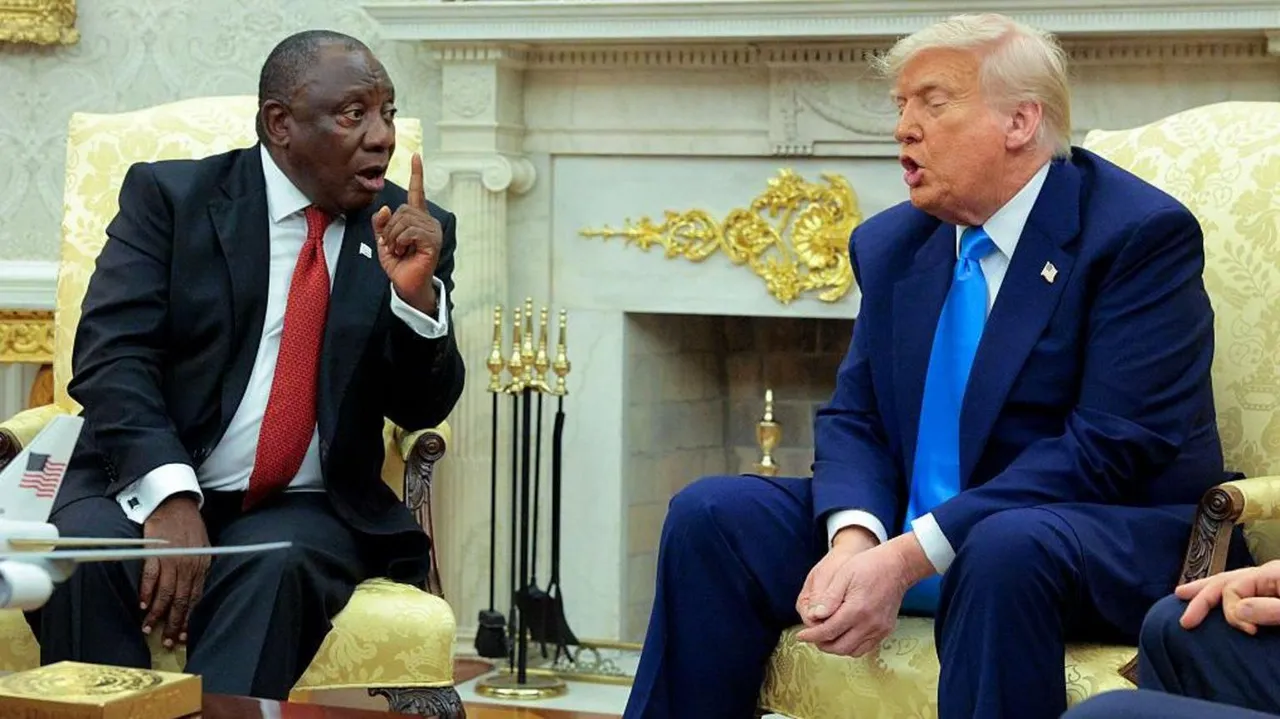
In a letter to South African President Cyril Ramaphosa, Trump said Pretoria's actions on international security and its relations with governments of concern to Washington risked undermining US national security and foreign policy interests. He also accused South Africa of maintaining significant barriers to American trade and investment, including restrictions on agricultural market access, regulatory requirements, investment protections and intellectual property.
Washington additionally cited corruption as a concern in South Africa's case.
South Africa's Trade Minister Parks Tau described the decision as "unfortunate", saying Washington was raising new issues that had not featured in trade negotiations between the two countries, which began in 2025.
"We will continue to accelerate the diversification of South Africa's export markets to protect jobs," Tau said.
Government figures show that about 89% of South African exports to the US entered under ordinary World Trade Organization most-favoured-nation terms in 2025, while around 10% benefited from AGOA, down from 28% in 2024. AGOA exports represent approximately 1% of South Africa's total global exports.
"The value of South African exports under the programme fell to about $1.7bn in 2025, from $4bn the previous year," Tau said.
Bilateral trade between the two countries reached $28.8 billion in 2025. More than 600 American companies operate in South Africa, supporting approximately 134,600 jobs. South Africa supplies 12 of the 50 minerals considered critical by the US, as well as 70% of American isotopes used, among other things, in cancer treatment.
South Africa's export-dependent citrus industry warned that its entire value chain "on both sides of the Atlantic, is now under threat," adding that jobs and the economic security of entire communities were at stake.
US Ambassador to South Africa Leo Brent Bozell III said it was regrettable that South African policies had led to the country's removal from AGOA. "This was a predictable and preventable outcome resulting from the rejection by South Africa's government of real concerns raised by the US," he wrote on social media.
President Ramaphosa had said in recent weeks that South Africa must prepare for exclusion from the programme by seeking new markets and trade deals with partners including China. The government said on Monday that the US remains an important trade partner and that it would provide support for affected sectors.
Relations between Washington and Pretoria have been strained. Trump has accused South Africa of persecuting its white minority and launched a programme for white Afrikaners to seek asylum in the US, repeating widely discredited claims of a genocide of South Africa's white population. South Africa's government has said these claims are falsehoods spread by fringe groups.
Washington has also taken issue with South Africa's foreign policy, in particular the genocide case it brought against Israel at the International Court of Justice.
In Rwanda's case, the US raised concerns about human rights, political pluralism, the rule of law and workers' rights. Rwanda was previously suspended from AGOA in 2018.
The announcement comes barely a week after the US Treasury sanctioned Rwanda's defence ministry over its alleged role in the armed rebellion in eastern Democratic Republic of Congo. The Treasury said Rwanda's defence ministry directed thousands of troops to fight alongside M23 rebels in eastern DR Congo, providing weapons, equipment, logistics and training. Rwanda has denied backing the M23.
Rwanda's exports to the US rose to $43.3 million in 2025, up from $13.1 million in 2024, according to US import data. Rwanda's main exports to the US include coffee, tea and minerals.