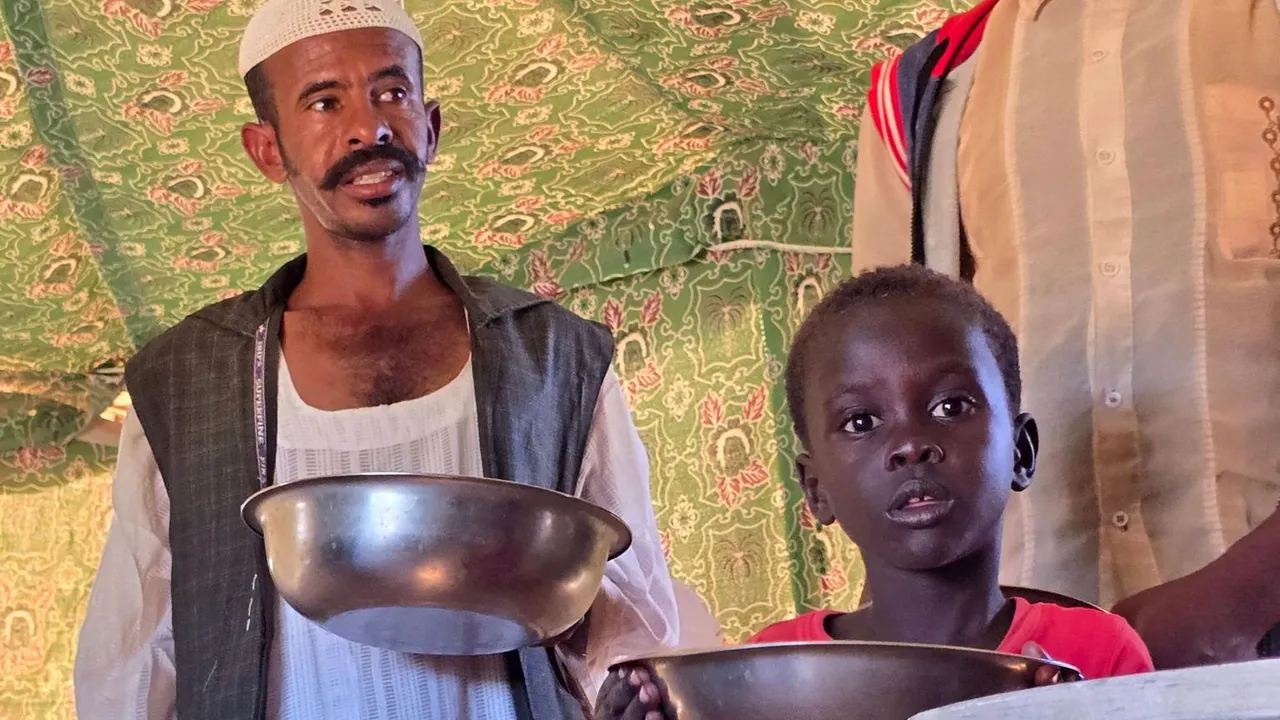
The United States, the European Union, and more than 30 countries have warned of an "alarming deterioration" in food security in Sudan, calling for urgent action to prevent famine as the country's civil war grinds into its third year.
In a joint statement released by the US State Department on Monday, the signatories urged the warring parties to lift all obstacles to humanitarian assistance and allow full, safe, rapid, and unimpeded access for aid operations.
"Sudan is experiencing an alarming deterioration in its food security. The risk of famine in the coming months, as warned by the Integrated Food Security Phase Classification, needs urgent action," the statement said. "The parties to the conflict bear primary responsibility for alleviating the suffering of the Sudanese people."
The statement was signed by the US, Australia, Canada, the United Kingdom, France, Germany, Switzerland, Norway, and 28 European countries, as well as the European Commissioner for equality, preparedness, and crisis management.
The signatories estimate that 19.5 million people, or 41 percent of Sudan's population, are experiencing high levels of acute food insecurity. Of those, five million are facing emergency levels of hunger.
In June, the UN-backed Integrated Food Security Phase Classification estimated that 5.1 million people in Sudan faced severe hunger. Without immediate action, the joint statement warned, "the number of children suffering from severe acute malnutrition could exceed the projected 825,000."
The conflict, which began in April 2023 following a power struggle between the Sudanese Armed Forces and the paramilitary Rapid Support Forces, has killed tens of thousands of people and displaced between 13 and 14 million, according to different reports.
The joint statement identifies conflict as the primary driver of the hunger crisis, citing damage to critical infrastructure and widespread disruption of food production. The crisis has been further compounded by the effects of El Nino, which has reduced rainfall, increased drought across more than half of Sudan, driven up food prices, and reduced supplies.
Yusuf Roble, regional director for Islamic Relief East Africa, described the conditions facing civilians returning to Omdurman. "There is very little to survive on," he said, noting that people were finding their homes destroyed or looted.
Roble described meeting a mother of seven whose husband had been missing for years. "I met a mother of seven children who doesn't really know the whereabouts of her husband for the last three and a half years and he was the breadwinner, the sole breadwinner for the family," he said.
He added that many displaced people depend on community kitchens for food, but that even those resources are under strain. "Their meals come from the community kitchen, which doesn't really even have very long-term support because of funding cuts," Roble said.
The World Health Organization has described the situation in Sudan as the world's worst humanitarian crisis. However, Roble noted that only 40 percent of Sudan's 2026 humanitarian needs plan had been funded as of September.
The signatories urged the warring parties to allow humanitarian operations through all routes across front lines and borders, including air access to the Darfur region, and to ensure the safety and continued presence of humanitarian personnel throughout the country.
The statement also called on the broader international community to act. "In the face of a potential famine, we call on all members of the international community to urgently scale up funding in response to increased needs and support efforts to ensure assistance reaches those most in need," it said.