The United States has announced visa restrictions targeting South Africans accused of discriminating against the country's white minority, marking a further escalation in tensions between Washington and Pretoria.
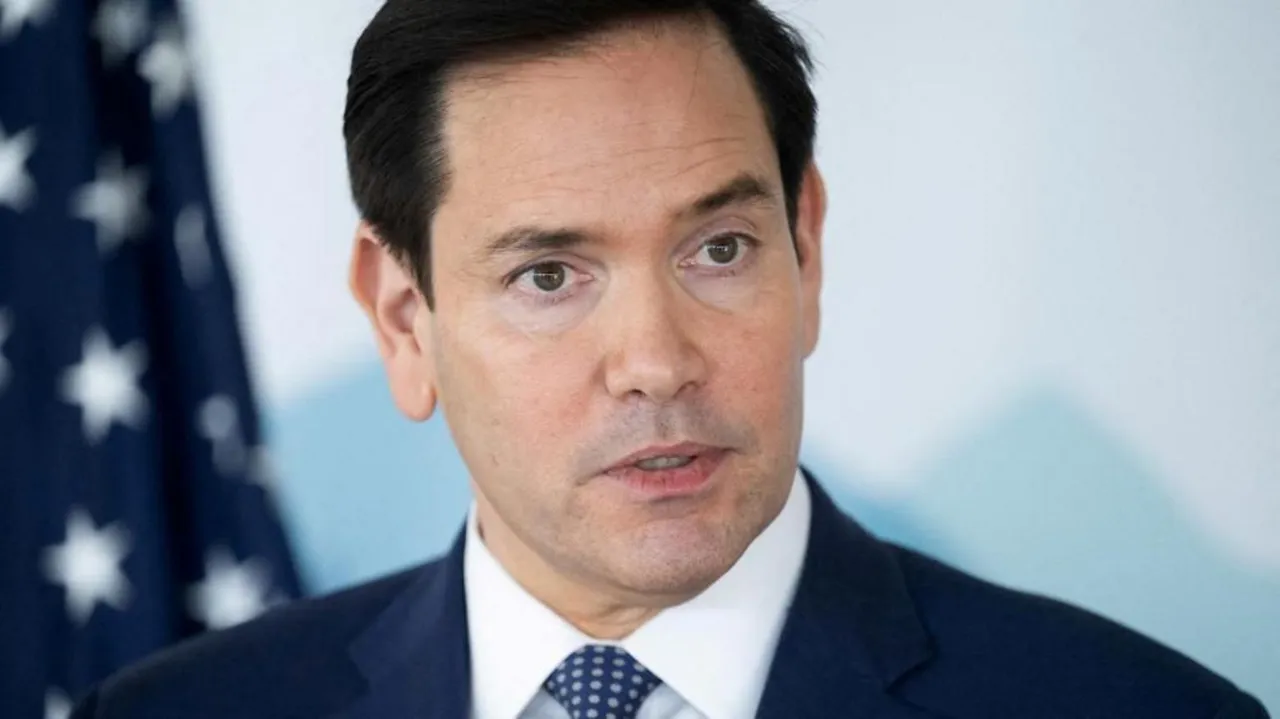
US Secretary of State Marco Rubio announced the measures on Tuesday, saying the restrictions would apply to "foreign nationals who enact or enable policies that promote race-based discrimination, incite violence, or enable land confiscation without compensation in South Africa." No individuals were named in the announcement.
Rubio said the South African government had "consistently failed to adequately address rural crime, violent and dehumanising rhetoric, and race-based discriminatory policies against Afrikaners and other minority populations." He added: "The United States will not allow such behaviour to go unchecked."
In a separate social media post, Rubio accused the South African government of pursuing "racial grievance against the Afrikaner minority" and said those responsible for what he described as injustices "have no place in the United States."
The US ambassador to South Africa said the announcement signalled a harder line ahead. "As has been made absolutely clear, the time for endless 'dialogue' has run its course," the ambassador wrote on X. "This visa restriction policy is only the first step in a series of escalatory measures that will show America's firm resolve in this matter."
South Africa's foreign ministry rejected the characterisation of its policies. "The announcement once again aligns with the mischaracterisation of South Africa's domestic policies by fringe groups who wrongly portray themselves as representatives of 'minorities' and Afrikaners in general," ministry spokesperson Chrispin Phiri said in a statement.
Phiri added: "It is our sovereign right to put in place laws that address the nation's concern over centuries of racial injustice. South Africa respects that the United States may hold different views regarding particular measures and their implementation."
Relations between the two countries have deteriorated sharply since President Donald Trump returned to office early last year. The US has cut aid to South Africa, expelled the South African ambassador, barred the country from this year's G20 summit in Miami, and established a refugee programme for Afrikaners and other South African minorities.
Trump has repeatedly claimed there is a "white genocide" in South Africa, allegations the South African government has firmly rejected. South Africa's latest crime statistics do not indicate that white people face a greater risk of violent crime than other racial groups. Claims of a white genocide have been widely discredited and described as lacking reliable evidence.
The dispute has centred in part on a land expropriation law signed by South African President Cyril Ramaphosa last year. The legislation allows the state to seize land without compensation in specific circumstances, such as when land is abandoned or held purely for speculation. It also requires authorities, in most cases, to first attempt to reach an agreement with property owners, and disputes may be taken to court.
The South African government says the law does not permit arbitrary seizures and that land reform is necessary to address historic inequalities stemming from the apartheid era, during which the black majority was dispossessed of land and denied basic rights. Most private farmland in South Africa remains owned by white South Africans, who make up just over seven percent of the population. White South Africans typically hold around 20 times the wealth of black South Africans, according to a 2023 article in the Review of Political Economy.
Afrikaners are descended from Dutch and French settlers and ruled South Africa during the apartheid regime. Since Nelson Mandela became the country's first black president in 1994, successive governments have pursued policies aimed at redressing racial inequality, including Black economic empowerment measures and land redistribution programmes.
An earlier attempt to ease tensions came when Ramaphosa visited the White House last year with a large delegation that included white members of his coalition government. Trump used the Oval Office meeting to present what he described as evidence of violence against white South Africans, material that has since been widely discredited.