Uganda has become a focal point in international Ebola investigations, even as the country maintains it has no confirmed active cases of the virus. Health authorities in Kenya and Nigeria are examining infections in patients whose travel histories are connected to the East African nation.
Both patients are reported to have passed through Uganda's Entebbe International Airport on 3 October, according to Wessam Mankoula, head of emergency preparedness and response at the Africa Centres for Disease Control and Prevention (Africa CDC). Investigators are examining whether the two patients were at the airport at the same time and whether their movements overlapped, though no link has been established.
Nigeria confirmed its first imported Ebola case in more than a decade on 20 October. The patient is a 42-year-old woman of Ugandan origin who lives in Abuja. Switzerland's Federal Department of Foreign Affairs has confirmed she is the wife of a Swiss diplomat based in the Nigerian capital.
The woman developed symptoms on 7 October, four days after arriving in Abuja, and sought treatment at two private health facilities before testing positive for Ebola on 20 October. She had spent about a week at a private clinic before her diagnosis. She is currently receiving treatment in isolation and is showing signs of improvement, according to the World Health Organization (WHO).
Her husband is in isolation but has not developed any symptoms. The Swiss foreign ministry said all 25 staff at its embassy in Nigeria were in good health and did not need to isolate. The embassy remained open and operational, with health and safety measures in place.
The woman's travel history has become central to the investigation. Uganda's Health Ministry said preliminary findings indicated she had traveled to eastern Democratic Republic of Congo for business before passing through Uganda without symptoms and returning to Nigeria. However, Switzerland directly disputed this account. "She and her husband did not travel to the Democratic Republic of the Congo," the Swiss Federal Department of Foreign Affairs said in a statement.
The WHO and Africa CDC also said they had not received confirmed information establishing that the woman had visited the DRC. Switzerland said she was believed to have contracted Ebola while traveling with her husband in Uganda, though that assessment has not been independently confirmed.
"The source of exposure is still not known. The travel history of the patient is still being pieced together," said Dr Patrick Otim, a WHO emergency response official. He said investigators had struggled to obtain a complete account of her movements because opportunities to interview her were limited while she remained in hospital.
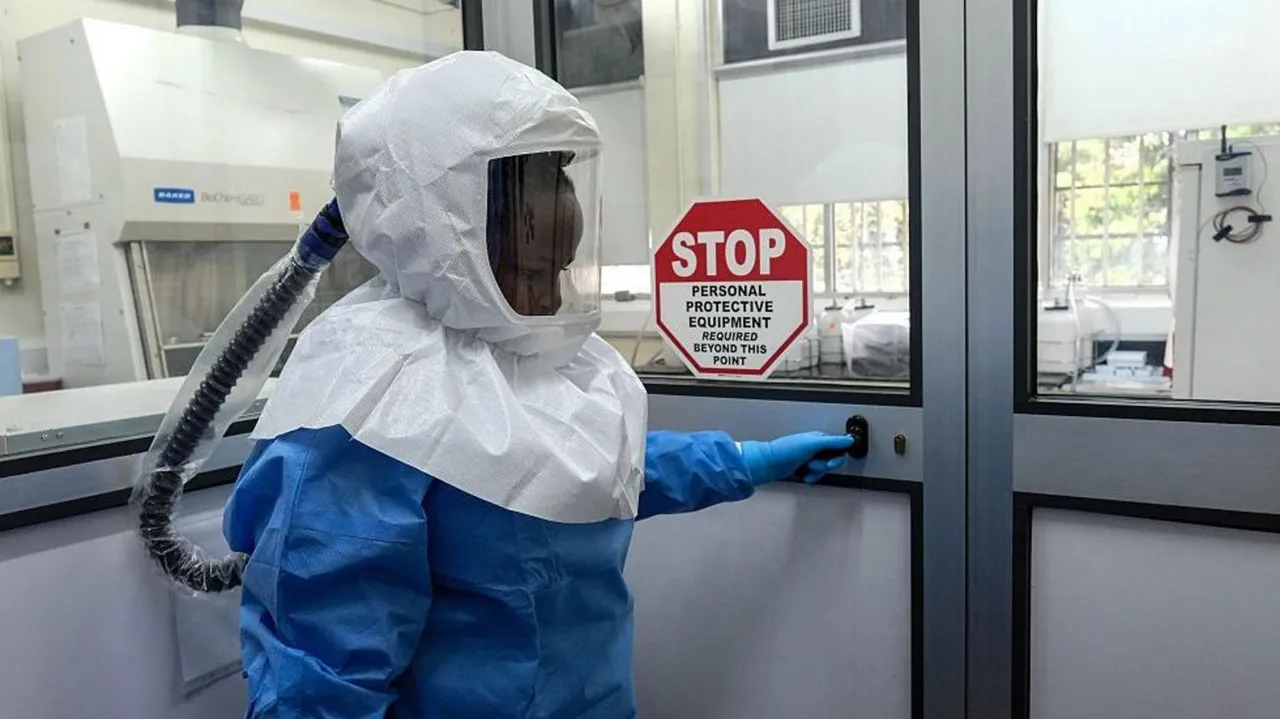
Nigeria's Centre for Disease Control and Prevention said it was carrying out genomic sequencing to help establish whether her infection is linked to other cases. It has been confirmed that she has the Bundibugyo species of Ebola, the same strain responsible for the ongoing outbreak in the DRC. "The investigation is reconstructing the full travel and exposure history. Genomic sequencing is given a high priority," said Dr Pavel Ursu, the WHO's representative in Nigeria.
Nigerian authorities have identified 44 contacts, including healthcare workers, caregivers, patients, and people who may have encountered the woman during her travels. Authorities are tracing additional contacts beyond those initially identified.
In Kenya, the country's first confirmed Ebola patient died in Nairobi on 5 October. The man had traveled from the DRC through Uganda before arriving in Nairobi on 3 October. Kenya has since confirmed eight additional cases, bringing the total to nine. Kenya's Health Director-General Dr Patrick Amoth said all nine confirmed infections were linked to the first patient, with no evidence of wider community transmission. The eight surviving patients remain in isolation and are responding to treatment.
"We are not out of the woods," Dr Amoth warned, urging the public to remain vigilant but not to panic.
Mankoula described a possible connection between the Kenyan and Nigerian patients as "one of the possible scenarios," but stressed that no link had been established. Investigators are examining whether the two could have been exposed through shared equipment or other contact at Entebbe airport.
Uganda borders the DRC, where more than 4,600 people have died in the country's deadliest recorded Ebola outbreak. Two people died in Uganda shortly after that outbreak began in May, but the country was declared free of Ebola in August. Uganda maintains that travel through its territory does not establish that infection occurred there. "Travel through Uganda does not establish that infection occurred here. The location of exposure remains under investigation," the Ugandan Health Ministry said in a statement issued on 20 October.
Ebola cases have now been detected in four African countries: the DRC, Uganda, Kenya, and Nigeria.