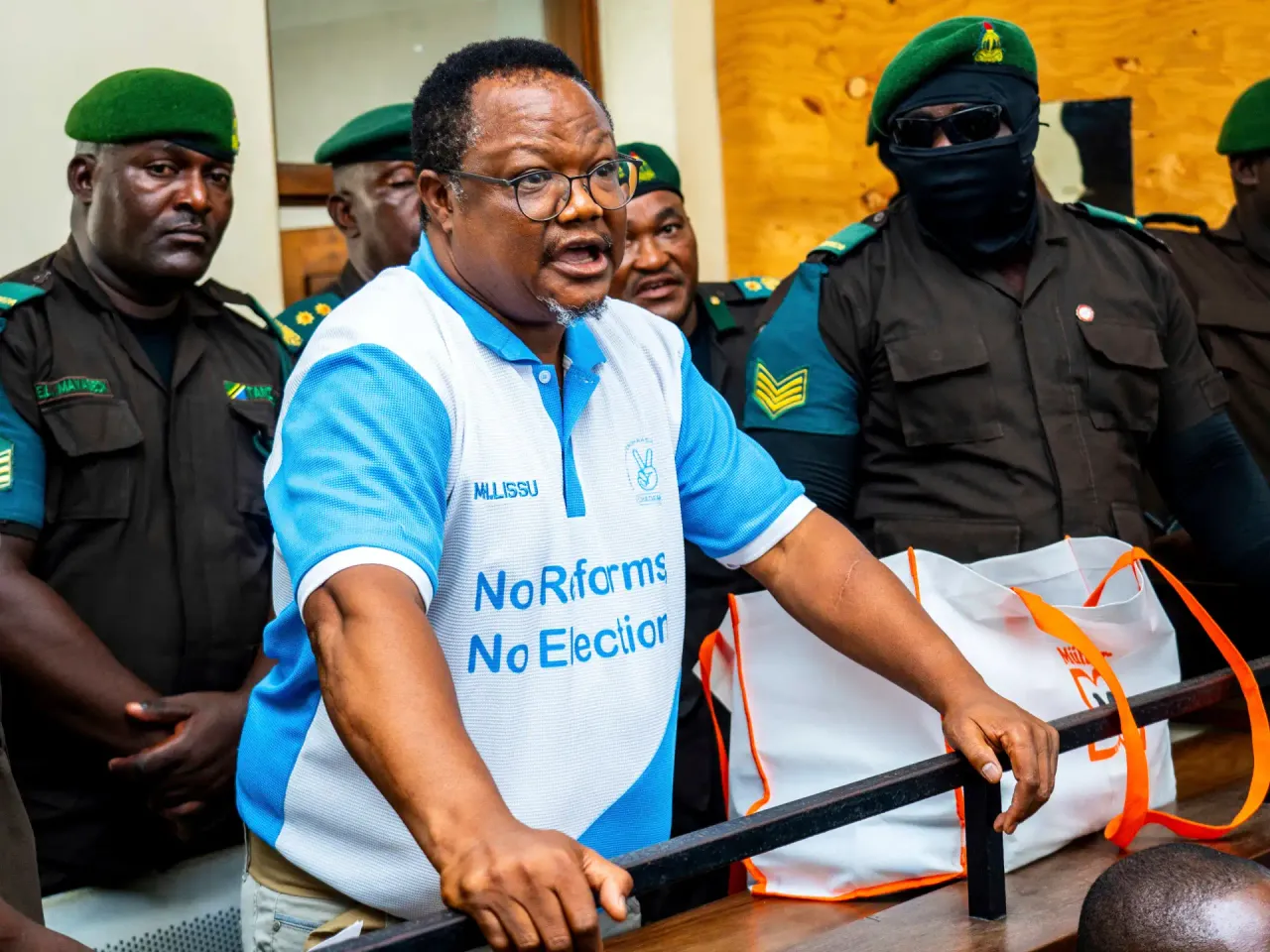
Tanzania's jailed opposition leader Tundu Lissu has ended a brief hunger strike after prison authorities allowed him to meet privately with his legal team, his lawyer has confirmed.
Lissu leads the opposition Party for Democracy and Progress (CHADEMA) and came second in the 2020 presidential election. He was arrested in April 2025 after addressing a rally calling for electoral reforms and was subsequently charged with treason over a speech prosecutors say urged the public to rebel and disrupt last year's general election. The charge carries a possible death sentence. He has pleaded not guilty, and his lawyers say the charges are politically motivated. A judgement is due on November 6.
Accounts of when the hunger strike began have differed. CHADEMA spokesperson Brenda Rupia wrote on social media that Lissu began refusing food on Monday after his lawyers were denied entry to the prison where he is being held. His lawyer Rugemeleza Nshala told sources that the strike began on Tuesday morning, after promised private consultations failed to take place.
"Lissu did not take his tea, breakfast or lunch," Nshala said. He confirmed that Lissu ended the strike after lunchtime, following a meeting with his brother.
Nshala had also raised concerns about Lissu's health, noting that he relies on medication. Lissu survived being shot 16 times in a 2017 assassination attempt.
Tanzania's prisons service denied the reports, telling a Swahili-language daily that Lissu was safe and was not on hunger strike.
His detention, along with alleged abductions of government critics, has drawn scrutiny of the human rights record of President Samia Suluhu Hassan, who won a 2025 election. The government has rejected accusations of widespread abuses and said it is committed to respecting human rights. It ordered an investigation into reports of abductions in 2024, though no official findings have been made public.
On Tuesday, CHADEMA announced seven days of mourning, running from Thursday to November 4, to mark the anniversary of the October 29 election. A government-appointed inquiry found that at least 518 people were killed in the violence that followed the vote. CHADEMA puts the death toll at approximately 2,000, a figure the United Nations said it could not verify.


