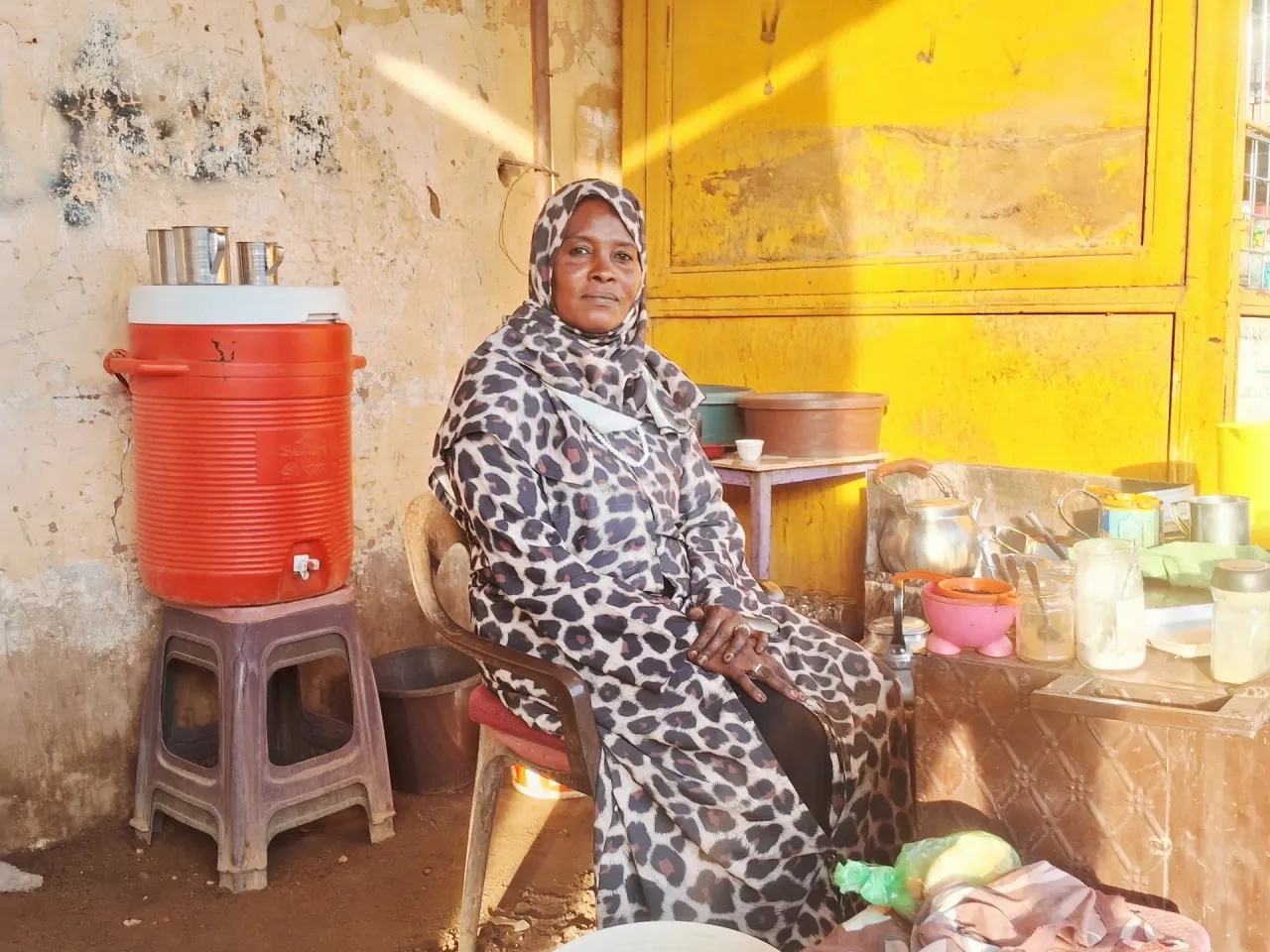
Rasha Abdelaziz Musa works seven hours a day selling tea, finishing at 10pm. Even then, the 39-year-old is unsure whether she has earned enough to feed her four children.
Her husband, a member of the Sudanese military, has spent more than eight months on the front lines of the country's ongoing war between the armed forces and the paramilitary Rapid Support Forces, which began in 2023. Musa has not heard from him in months and has received no money from him.
She told sources that feeding her family costs around 40,000 Sudanese pounds per day — approximately four US dollars at the parallel-market exchange rate — before accounting for rent and other household expenses. Family staples include ful medames, a dish of stewed fava beans, or lentils. When lentils become too expensive, she serves taamiya, or falafel, sandwiches. Prices change regularly, and Musa often ends the day in debt to the traders she buys food from.
Musa is not alone. Ahmed Youssef, 61, supports a family of 12 through work at a butcher's shop and occasional livestock sales. He can earn between 90,000 and 140,000 Sudanese pounds — roughly nine to fourteen dollars — when a deal succeeds, but that income is irregular. His household spends more than 100,000 pounds, around ten dollars, every day.
"One income is no longer enough to cover the family's needs, and sometimes my older children have to work to help meet expenses," Youssef said.
Ali Fadil, 57, supports a family of 10 without a permanent job. Each morning he goes to the market looking for work. Some days he earns enough to buy food; on others, he finds nothing. His daily expenses still reach around 70,000 pounds, approximately seven dollars.
"Sometimes I skip meals so I can pay for school fees or medical costs," Fadil said. "I also borrow money to meet other obligations."
A survey of four local markets in the Khartoum area conducted last week found that prices for several essential foods had risen sharply within days, making it increasingly difficult for families to plan their spending.
A kilogramme of sugar cost around 10,000 pounds, up from 9,000 pounds just two days earlier. A litre of cooking oil rose to 25,000 pounds from 20,000 pounds. A loaf of bread reached 500 pounds, compared with 300 pounds a week earlier. Lentils rose to 10,000 pounds per kilogramme from 8,000 pounds, while rice climbed to 13,000 pounds per kilogramme from 10,000 pounds. Powdered milk reached 70,000 pounds per kilogramme, up from 60,000 pounds two days prior.
The Sudanese pound has continued to weaken on the parallel market. On Friday, one US dollar was trading at 10,050 Sudanese pounds, compared with 9,500 the previous day.
Official figures confirm the broader trend. According to Sudan's Central Bureau of Statistics, prices across the country were 28 percent higher in September than a year earlier, up from an annual increase of 26 percent in August. Prices rose by 7.5 percent in September alone, more than double the increase recorded the previous month.
Food prices have risen even faster. Across Sudan, food and beverages cost nearly 37 percent more in September than a year earlier, compared with an annual increase of approximately 21 percent in August.