Police in South Africa have confirmed the discovery of a ninth woman's body east of Johannesburg in the space of two months, deepening public alarm over a string of unexplained female deaths in the Ekurhuleni municipality.
The latest victim was found half-naked and wrapped in a sheet on the side of a road in Dawn Park on Thursday morning. She is believed to have been in her 30s and appeared to have bruises and stab wounds. Her identity has not yet been released.
The discovery follows the deaths of eight other women whose bodies have been found since July across Ekurhuleni, a major urban area east of Johannesburg. All victims were women in their 20s or 30s, found either naked or partially clothed. Some of the bodies showed similar bruising.
Police also imposed a lockdown in Kempton Park, in the Ekurhuleni municipality, on Thursday. Three partially naked bodies were found in the area this week alone.
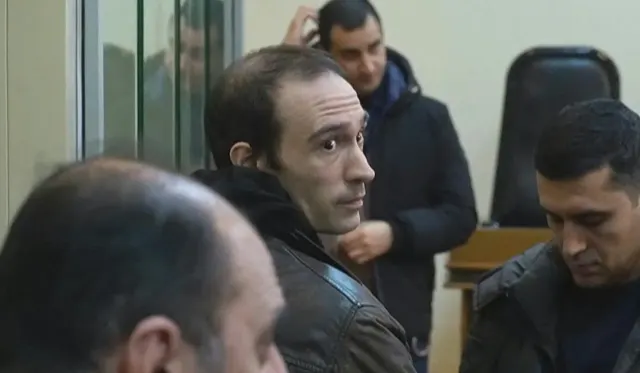
The first body was discovered on 15 July in Kempton Park, naked and restrained with cable ties. A suspect, believed to have been the victim's boyfriend, was arrested two days later and remains in custody, though no charges have been filed against him. Police have not linked that suspect to the other deaths.
Further bodies were subsequently found in August and September in locations including Kempton Park, Olifantsfontein, Clayville and KwaThema. The first five bodies were discovered in or near Kempton Park; the others were found in separate locations 25 to 35 kilometres away.
Among the identified victims is 38-year-old Elizabeth "Tsontso" Moselakgomo, who went missing while on an afternoon jog. Her eight-year-old daughter alerted family members when she did not return, and her body was found several days later behind a hotel in Kempton Park. Two other victims have been identified as Itumeleng Kekana, who had been missing since July, and 38-year-old Dineo Evelyn Motapane, whose body was found by the roadside in KwaThema on Tuesday. The youngest victim identified so far was 20 years old.
Police have assembled a multidisciplinary team of detectives, intelligence officers, forensic experts and other specialists to investigate the deaths. Authorities are also pursuing a person of interest, though they have not disclosed which case or cases that individual may be connected to.
"Police are comparing the evidence, timelines, locations, victim profiles and circumstances of each case," said Gauteng police commissioner Fred Kekana, adding that while it was too early to connect the killings to a serial killer, "the similarities in the cases were concerning."
Acting Police Minister Firoz Cachalia cautioned against speculation, saying investigators were dealing with what appeared, at this stage, to be "quite distinct, separate events." Police said they were considering all possibilities, including multiple suspects or separate perpetrators.
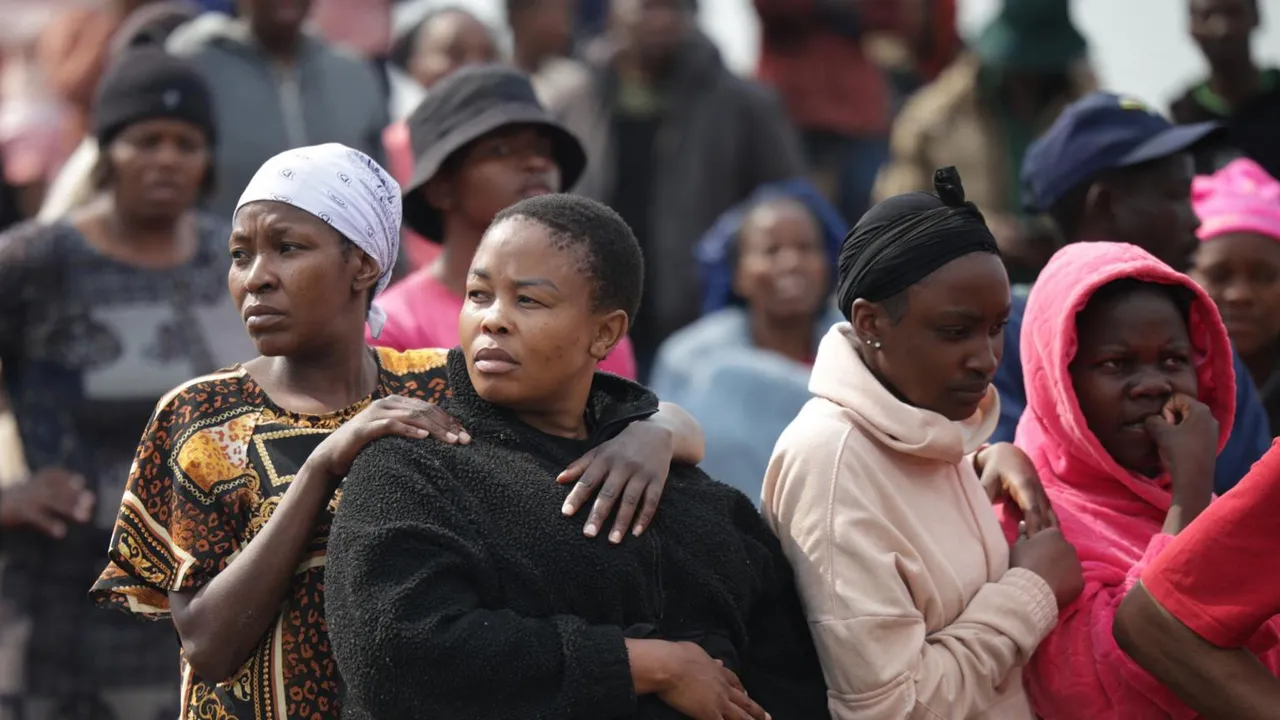
The discoveries have sparked widespread fear in the area. "We are scared to come out of our houses. We are scared to go to the shops. We are no longer free in a country where we are supposed to be safe as women," said local resident Bongeka Sebela.
"We cannot continue picking up bodies," said Tebello Mosikili, the deputy national commissioner for policing in the South African Police Service, speaking to journalists at the scene of the latest discovery.
Gauteng Premier Panyaza Lesufi said on Thursday that authorities had the capacity to deal with the killings. "Let's not get emotional, the gloves are off," he said.
President Cyril Ramaphosa has vowed that "no stone will be left unturned" in finding those responsible, saying the killings were "causing fear and uncertainty in our communities." Authorities are offering a reward of 400,000 rand — approximately $24,000 to $25,000 — for information leading to arrests, and have appealed to families with missing relatives to help identify remaining victims.
Police have advised women in the area to avoid walking alone or using isolated routes, to remain alert to strangers and suspicious vehicles, and to share their location or travel plans with someone they trust.
The killings have drawn renewed attention to South Africa's persistently high levels of gender-based violence. According to the United Nations, South Africa has one of the highest femicide rates in the world, with women killed at a rate five times higher than the global average. Police recorded 9,782 reported rapes between January and March 2026, along with 12,590 sexual offences — roughly 108 reported rapes per day. Almost half of those reported rapes, 47.2 percent, took place at the home of the victim or the perpetrator.
In November last year, South Africa's National Disaster Management Centre classified gender-based violence and femicide as a national disaster, following sustained pressure from civil society organisations. A 2022 study by a South African think tank found that more than 35 percent of adult women in the country had experienced physical or sexual violence at some point in their lives.