Ethiopia's federal army and pro-government fighters have recaptured the main airport in Mekelle, the capital of the northern Tigray region, as rebel forces were seen withdrawing from the city.
The Ethiopian National Defence Forces regained control of Alula Aba Nega Airport, located approximately 10 kilometres from the city centre, according to two sources with knowledge of events on the ground. The airport was one of three airfields in the region seized by rebel forces when fighting broke out on September 23.
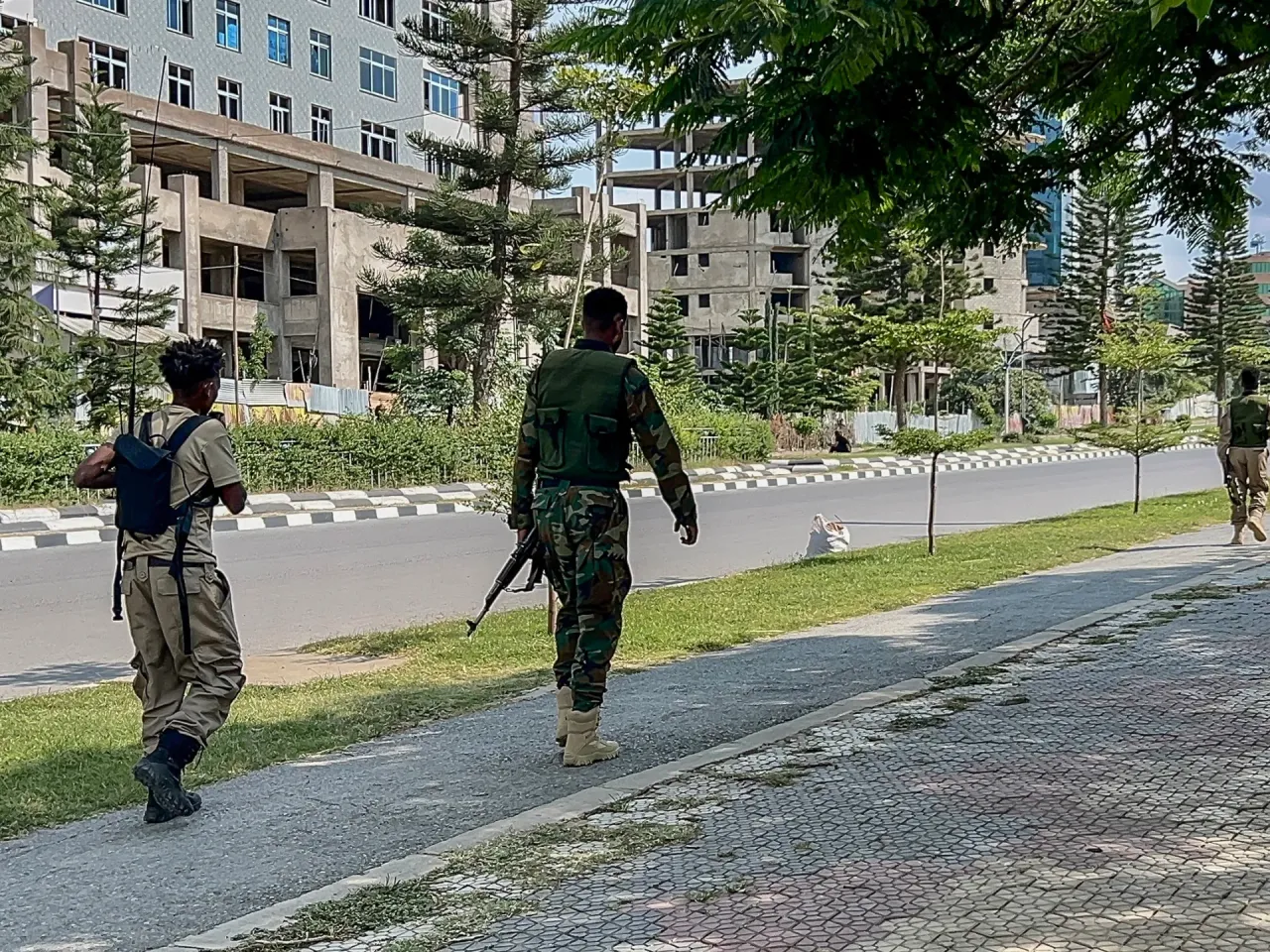
Leaders of the Tigray People's Liberation Front (TPLF) and their fighters were seen retreating from Mekelle, according to a local journalist and residents. The journalist noted, however, that federal forces had not yet been seen inside the city itself.
Residents expressed alarm over the security vacuum left by the withdrawal. "I am concerned that government and public property could be exposed to looting because there are no security forces in the city," one resident said. "I am worried that lawlessness could spread in the city, and I am also afraid for my life. I want us to quickly return to law and order," another resident added.
Media access in Ethiopia remains heavily restricted, and significant communications blackouts have been reported. The claims could not be independently verified.
The current conflict began after rebels announced the formation of a seven-party coalition led by the TPLF last month -- the same armed group that fought federal forces from Addis Ababa in the 2020-2022 civil war. The new coalition includes rebel groups of varying sizes from across the country.
Shortly after its formation, the coalition launched an offensive, seizing three airports in and around the contested Tigray region and engaging in fighting along the borders with Amhara and Afar states.
The government has since launched a counteroffensive, pushing into Tigrayan territory along three axes toward Mekelle, according to the Critical Threats Project, a body affiliated with the American Enterprise Institute think tank.
Fighting has so far been concentrated in Tigray, though rebels have reportedly carried out drone attacks on the capital, Addis Ababa. Amnesty International has documented drone attacks, intensified forced conscription, and strikes on civilian infrastructure since hostilities resumed.
Neither the TPLF nor the government has commented publicly on the latest developments on the ground.
The renewed conflict has not yet reached the scale of the 2020-2022 Tigray war, which resulted in hundreds of thousands of deaths, but it is rapidly taking on a regional dimension.
Prime Minister Abiy Ahmed's government has accused Eritrea, Sudan, and Egypt of backing the opposition coalition. Sudan and Egypt have denied any involvement. Eritrea severed diplomatic ties with Ethiopia over the accusations.
On Thursday, Eritrea denied involvement in the conflict and accused Addis Ababa of "pursuing an agenda of incessant hostility." It also alleged that Ethiopia was planning to invade Eritrea in order to secure sovereign access to the Red Sea coast. Ethiopia has previously ruled out seeking conflict with Eritrea over coastal access.
TPLF leader Debretsion Gebremichael said in a video published Thursday that "the war is regional and it is a war to control the Red Sea."