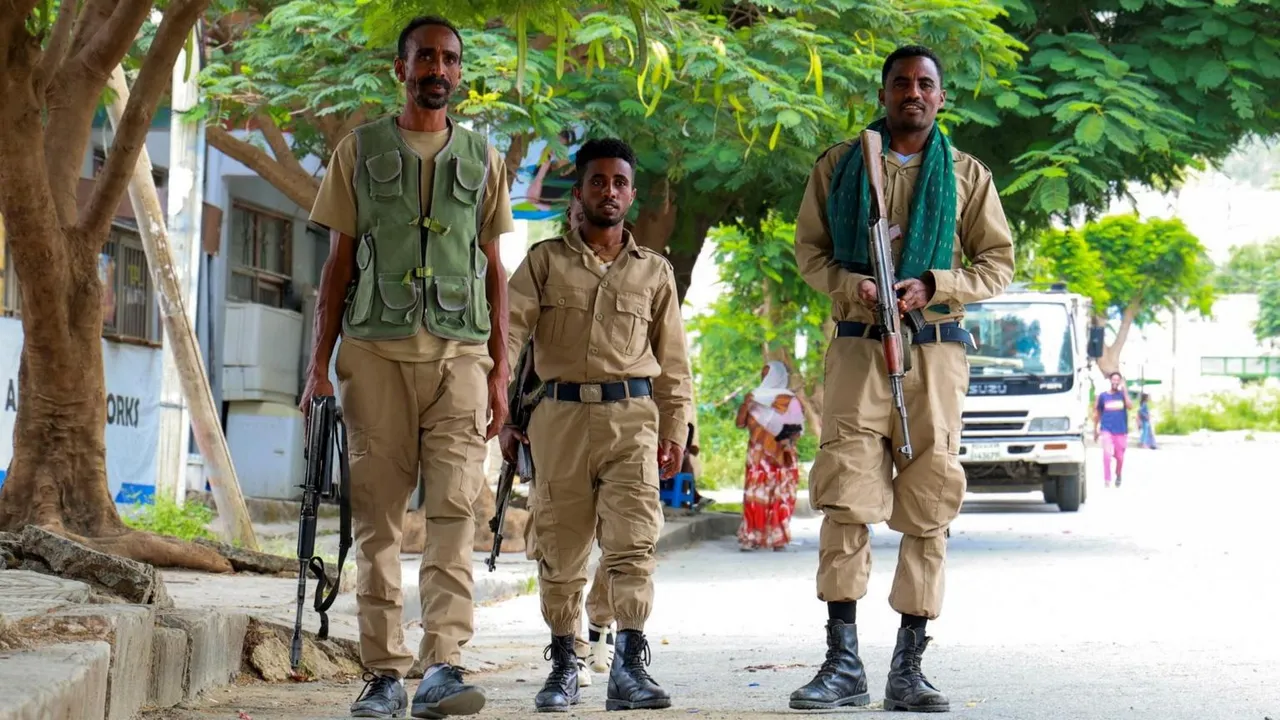
Fighting has broken out in Ethiopia's northern Tigray region between regional forces and the national army, raising fears of a return to full-scale war less than three years after a devastating conflict that killed an estimated 600,000 people.
Residents in Tigray have reported panic buying as tensions escalate. Internet and phone services have been disrupted, cutting people off from digital payment apps in a region where ATMs stopped functioning months ago, leaving many without access to cash.
Major clashes erupted this week in Tigray and quickly spread into the neighbouring Afar and Amhara regions.
The two sides offer conflicting accounts of who fired first. The Tigray People's Liberation Front (TPLF) says it was responding to a federal offensive that included drone strikes. The federal government says Tigrayan forces struck first after seizing control of airports in the region.
The current escalation follows more than six months of deteriorating relations between Addis Ababa and the TPLF, the party that governs Tigray.
The African Union brokered a peace agreement, known as the Pretoria Agreement, in November 2022, ending a two-year war. Several key issues, however, remained unresolved, and tensions have been building throughout this year as both sides traded blame and troops mobilised amid sporadic clashes.
The roots of the conflict run deep. The TPLF first emerged as an armed movement in the 1970s, fighting Ethiopia's military government. It played a central role in overthrowing the Marxist regime in 1991 and became the dominant force within the Ethiopian People's Revolutionary Democratic Front, the coalition that governed the country for nearly three decades.
Its dominance was a source of resentment in some quarters, as Tigrayans make up only around six percent of Ethiopia's population.
When Abiy Ahmed became prime minister in 2018, he dissolved the coalition and replaced it with the Prosperity Party, sharply reducing the TPLF's influence. Relations between the two sides deteriorated rapidly, and war broke out in 2020 in what became one of the deadliest conflicts of the century. The AU mediator estimated that around 600,000 people died. Tigray was cut off from the outside world and pushed to the brink of famine.
Four unresolved issues have undermined the peace deal, two of them centred on the fertile territory of western Tigray.
The TPLF lost control of western Tigray in the early stages of the war to Amhara regional forces, which had fought alongside the federal army. Many in Amhara argue the territory should never have been incorporated into Tigray when regional boundaries were redrawn after 1991. During the war, hundreds of thousands of ethnic Tigrayans fled the area and are now living in displacement camps in Tigray and in Addis Ababa. The TPLF is demanding the return of the territory and the resettlement of those displaced. The federal government says the issue must be resolved through a referendum.
Disarmament is another major sticking point. The government accuses the TPLF of handing over only outdated weapons to the African Union while concealing the bulk of its arsenal.
Governance has also proved deeply contentious. Under the terms of the Pretoria Agreement, an interim administration for Tigray was appointed by Prime Minister Abiy. Disputes over his attempts to influence the region's affairs caused divisions within the TPLF itself. Shortly before the general election in May, which was not held in Tigray due to the security situation, the TPLF disbanded the interim administration and restored its pre-war governing structures. As a result, civil servants have stopped receiving salaries and public services have deteriorated, worsening an already fragile economic situation.
The TPLF, once politically isolated within Ethiopia, has also been gaining allies. Earlier in September, it joined...