Algeria's parliament has approved the deployment of troops to Niger, marking the country's first foreign military deployment since it sent forces to Egypt during the 1973 Arab-Israeli war.
Both chambers of parliament voted in favour on Sunday. The upper house, the Council of the Nation, approved the proposal first, with 148 of 174 senators voting in favour. The lower house, the People's National Assembly, subsequently ratified the decision.
The number of soldiers to be deployed and the timeline for their arrival have not been announced.
The deployment represents a significant shift in Algeria's longstanding foreign policy, which has historically been built around the principles of sovereignty, noninterference and opposition to foreign military intervention. It is also the first use of a 2020 constitutional provision that formalises the conditions under which Algerian troops may be sent abroad.
Under Article 91 of the constitution, the president may authorise overseas deployments provided they receive the backing of at least two-thirds of the members of each parliamentary chamber.
The troops are expected to protect oil installations belonging to Algeria's state-owned energy company, Sonatrach, in northern Niger, near the Libyan border.
"We are not sending our soldiers to wage war in Niger, but for a mission to secure economic infrastructure," Algerian senator Belkacem Boulghiti told reporters after the vote.
Algeria has significant economic interests in Niger. Sonatrach has signed an agreement with Niger's petroleum ministry to explore for oil in the Kafra region, where two exploration wells are estimated to contain 168 million and 100 million barrels respectively. The two countries are also involved in the long-delayed Trans-Saharan Gas Pipeline project, which would carry Nigerian gas through Niger to Algeria.
The deployment follows a visit to Algiers by Niger's defence minister, Salifou Mody, to discuss security cooperation. Niger has faced persistent attacks by armed groups, some of which are linked to al-Qaeda and Islamic State, including near its border with Algeria.
Relations between the two countries have been turbulent in recent years. Algeria condemned the 2023 military coup that ousted Niger's elected president, Mohamed Bazoum, and brought General Abdourahamane Tchiani to power. Tensions escalated further in 2025 when Algeria shot down a Malian drone near its border, prompting Niger, Mali and Burkina Faso to recall their ambassadors from Algiers in solidarity with Mali.
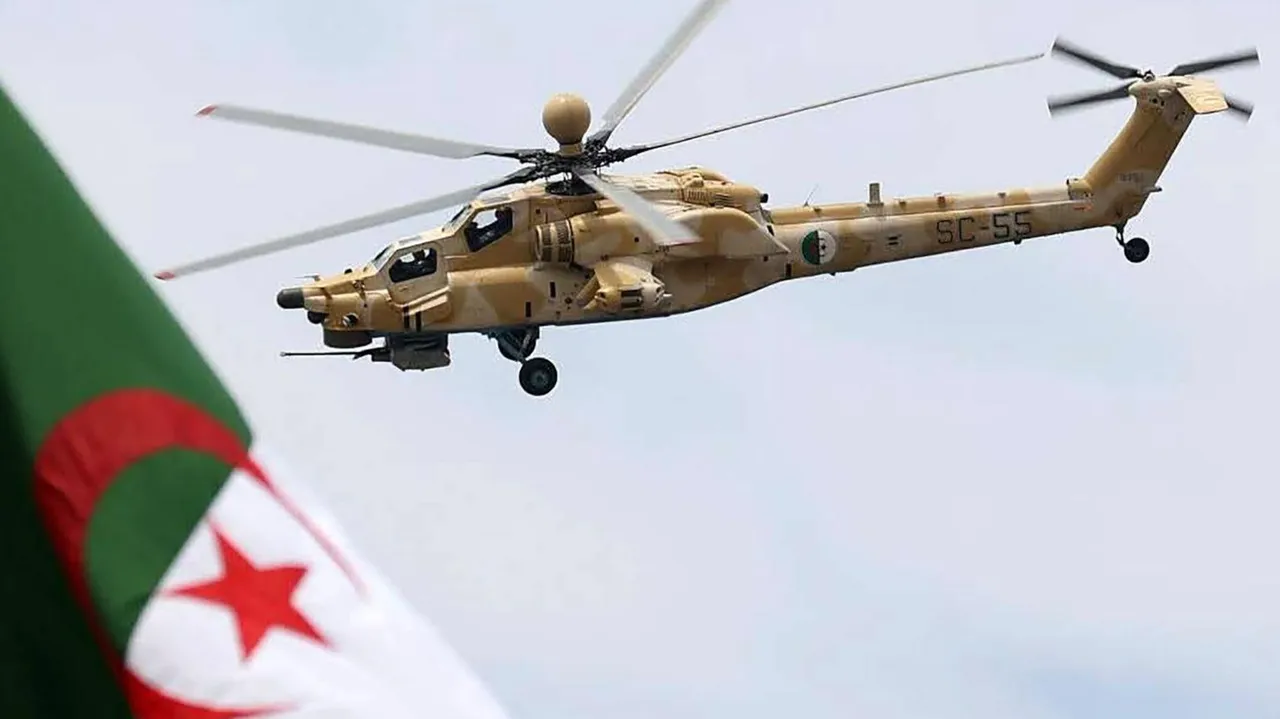
Ties have since improved. Tchiani visited Algeria in February 2026, and in late August, Algerian President Abdelmadjid Tebboune dispatched fighter jets to Niger following what Algerian authorities described as an attempt to destabilise Niger's military-led government. Algeria also donated four military helicopters to Niamey at that time.
Algeria shares thousands of kilometres of borders with Mali, Niger and Libya, making instability in the Sahel a direct security concern for Algiers rather than a distant one.
Algeria is Africa's largest military spender. According to the Stockholm International Peace Research Institute, the country spent more than 25 billion dollars on its armed forces in 2025.
The deployment also comes amid broader regional tensions. In September, Algeria severed diplomatic relations with the United Arab Emirates, accusing Abu Dhabi of repeated hostile and provocative actions. The two countries have long disagreed over several regional issues, including Western Sahara and alleged Emirati interference in North African and Sahelian affairs.