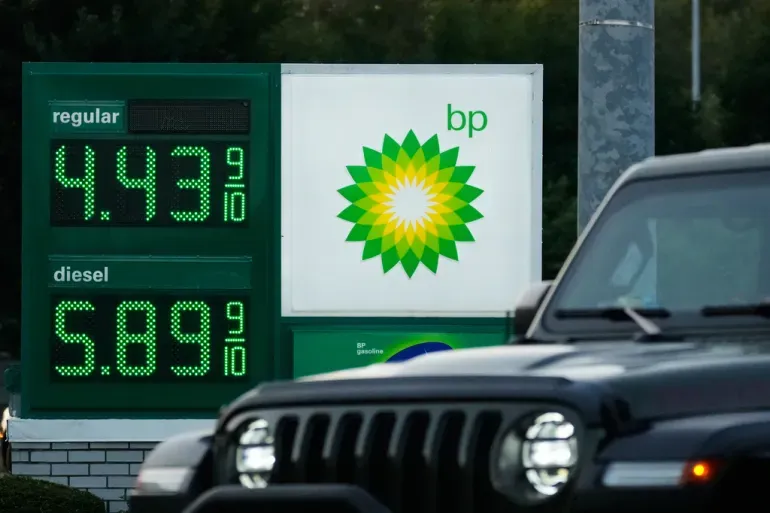
The average price of diesel fuel in the United States has reached a record high of $5.85 per gallon, surpassing the previous peak of $5.81 set in June 2022 following Russia's full-scale invasion of Ukraine, according to the American Automobile Association (AAA).
The new record was set on Friday. A gallon of diesel now costs roughly $2 more than it did before the war with Iran began, and up from a national average of $3.71 a year ago.
Diesel powers heavy machinery, large trucks, buses, trains, boats, farming equipment and construction vehicles. The price surge is expected to raise transportation and production costs across many industries, including groceries.
Fuel prices have soared since the conflict with Iran began at the end of February. Tehran responded to the opening US and Israeli strikes by effectively closing the Strait of Hormuz, a narrow waterway through which approximately one fifth of the world's oil is transported, sending energy prices sharply higher.
In recent weeks, President Donald Trump and his allies have argued that the US military has regained control of the waterway. Trump shared a social media post on Thursday claiming that 18 million barrels of oil are now passing through the strait daily, described as nearly equivalent to pre-war levels.
US Vice President JD Vance reiterated that position on Thursday. "If you go back three months ago, how much oil and gas was coming out of the strait under Iranian threats? It was virtually nothing. Now, it's almost back to where it was before the conflict even started," Vance said.
Iran has disputed those claims, insisting the strait remains under Tehran's control. Suspected Iranian strikes on ships in the waterway have continued almost daily. Earlier this week, an attack on a Saudi tanker killed two sailors.
Verifying the volume of oil passing through the strait is difficult, as tankers crossing under US protection turn off their transponders to avoid detection by Iranian forces.
On Wednesday, Trump suggested renaming the Strait of Hormuz the "Trump Strait." He had previously stated the waterway would become American territory.
Gasoline prices have also risen sharply. The national average reached $4.14 to $4.15 per gallon on Friday, a record high for the Labor Day holiday weekend. Before the Iran war began, a gallon of gasoline cost less than $3.
"Labor Day weekend travelers are facing the highest gas prices ever for this time of year," AAA said in a report on Friday. "Continued volatility in the Strait of Hormuz has pushed crude oil prices in the $90 per barrel range. After a record-setting August, this Labor Day weekend is on track to also set a record at the pump. The national average has never been above $4 per gallon on Labor Day."
Price increases are not uniform across the country. According to AAA data, drivers in Western states pay significantly more than those elsewhere, due to tax differences and greater distance from domestic oil producers. In Washington state, the average diesel price stands at $6.81 per gallon, compared to $5.03 a year ago.
The record fuel costs are fuelling public anger ahead of the congressional midterm elections in November, when Trump's Republican Party is seeking to retain control of both the Senate and the House of Representatives. The cost of living has emerged as a leading electoral issue.
According to recent polling, Trump's approval rating has fallen to 33 percent, with just 31 percent of Americans expressing support for the conflict with Iran.
In response to rising fuel costs, Trump recently pledged to lower gas prices through an oil deal with Venezuela. The agreement, announced on Saturday, calls for the development of 17 strategic oil fields with a proven potential of 65 billion barrels, along with what Interim Venezuelan President Delcy Rodriguez described as "an investment of more than $100bn and more than $209bn in taxes" for Venezuela. The US government would retain 55 percent control of a joint venture with a private operator.
Some analysts have reacted with scepticism, questioning whether the deal would overcome long-standing obstacles that have historically deterred investment in Venezuela's oil sector.