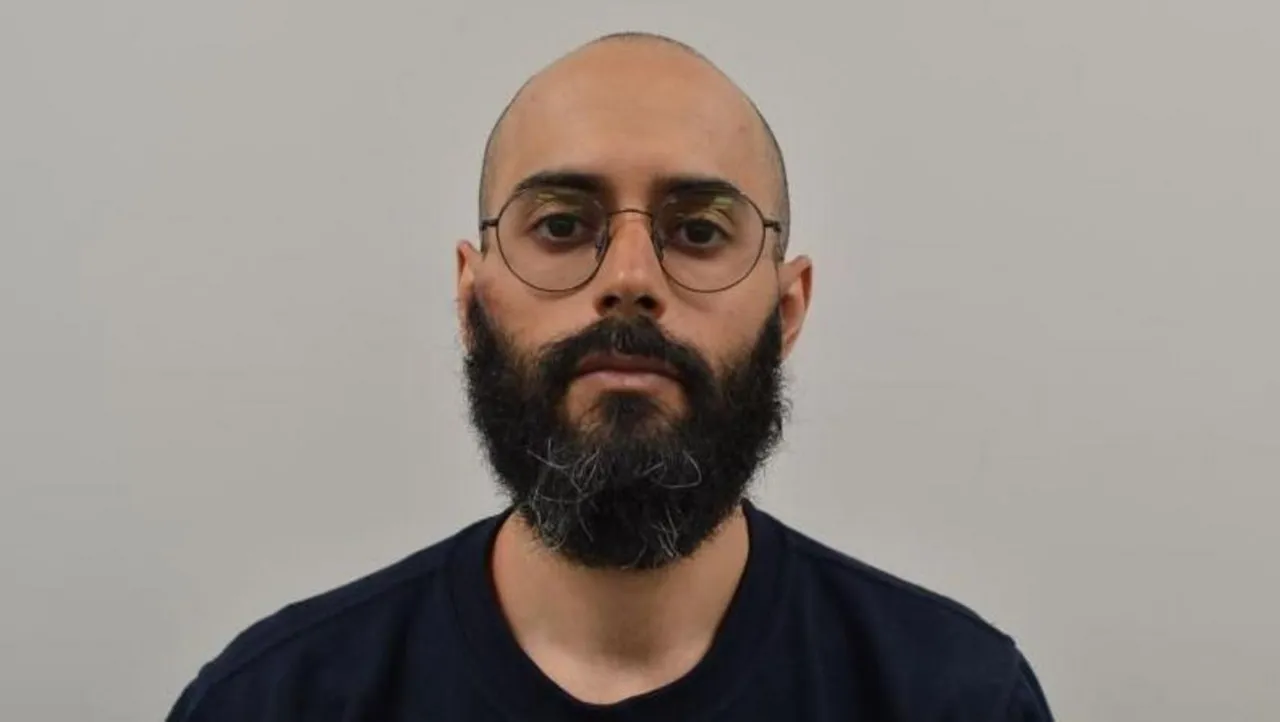
A failed asylum seeker who attempted to break into the Israeli embassy in London to carry out a knife attack has been sentenced to life in prison with a minimum term of 20 years.
Abdullah Albadri, 34, from Kuwait, was carrying two knives when police officers caught him trying to climb over a security fence at the Kensington embassy on 28 April 2025.
He had arrived in the UK on a small boat just 16 days before the attack, having first entered the country illegally four years earlier.
Albadri was found guilty by majority verdict at the Old Bailey of preparation of terrorist acts and possession of two bladed articles. The court heard he was motivated by the deaths of Palestinians in Gaza and had planned the attack while sleeping rough in London.
He first travelled to the UK on a small boat in August 2021 and applied for asylum, but returned to France before a decision was made. He crossed the Channel again in April 2025 and was initially housed in a hotel in Basingstoke for three days, before being told he was not eligible for accommodation due to his outstanding asylum application.
On the day of the attempted attack, Albadri walked from north London to the west London embassy wearing a red and white traditional Arabic scarf wrapped around his head and sunglasses.
The embassy is located on a street home to several large diplomatic buildings and has a round-the-clock police presence.
At around 18:00, he saluted in the direction of two nearby diplomatic protection officers before attempting to scale the security fence. The armed officers dragged him down from the railings and detained him.
When searched, police found two 10cm-long blades and a handwritten copy of a verse titled "the benefit of martyrdom."
During the incident, Albadri told officers: "I want to make a crime inside there. Why are you stopping me? Why are you stopping me from making crimes?" In a later interview at a police station, he said he had wanted "to do something to stop the war."
The court also heard evidence suggesting he may have acted in a way intended to force nearby armed officers to shoot him. Prosecutor Catherine Pattison said Albadri "intended to do something that would have resulted in the sacrifice of his life." She told the court that people were leaving the embassy at the time of the incident who "would not have had any chance to defend themselves" had he succeeded in breaching the perimeter.
Defence barrister Chris Henley argued that Albadri's plan "could never ever have succeeded," adding that "there was no serious risk of any harm to anybody." He said Albadri had acted in an "absurd, performative fashion" that was "deliberately designed to draw attention to himself," and that his client had spent the morning "trying to get help" to access housing.
The trial also heard that Albadri told officers "I wish you'd use that on me," and replied "I might be yeah" when asked whether he was referring to a rifle.
On Monday, Mrs Justice Lambert KC sentenced Albadri to life in prison with a minimum term of 20 years.
Commander Helen Flanagan, head of Counter Terrorism Policing London, said: "Albadri's attempt to carry out a terrorist attack at the embassy was thwarted due to the courageous and swift actions of officers on duty, who prevented him from breaching the security perimeter."
"The significant prison sentence he has received reflects the danger he posed on the day and the lack of remorse he has shown since he was arrested," she added.
Flanagan also noted that the Israeli embassy had "faced various security alerts in recent times" and that security measures were in place to "ensure the site and the wider community is kept as safe as possible."