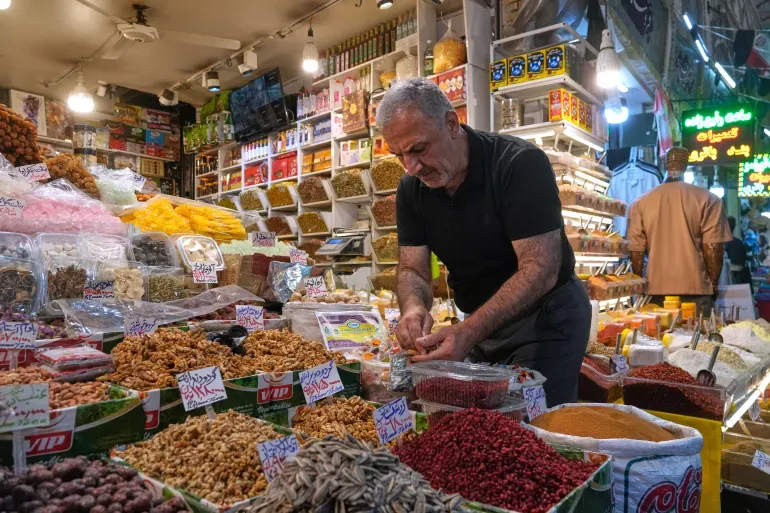
A 26-year-old teacher in Tehran named Saeed says he is searching for better-paying work after months of war between Iran and the United States, which has included a naval blockade of Iranian ports.
"You take one look at the condition of job postings you can find online or in person, and you will understand why some young people feel like it's not even worth it going out for work," he said. "But the expenses don't go away."
Saeed, who holds a master's degree in Persian literature, said many Iranians like him are now searching for any available job regardless of their field of education or experience, as putting food on the table has become increasingly difficult.
Workers in roles such as teaching, cashiering and sales earn less than 200 million rials per month — approximately $107 at the current exchange rate. Some positions pay below the basic monthly minimum wage of around 166 million rials, or roughly $88.

"A lot of employers don't offer insurance and are asking for 12 hours of work per day, sometimes six days a week. They also come up with all sorts of excuses to deduct pay whenever they can, knowing you have limited options," Saeed said.
For a worker earning minimum wage plus government support, one kilogram of lamb currently consumes around 10 percent of an entire month's wages. Ten kilograms of Iranian rice can absorb more than one-fifth of monthly earnings. Housing costs, utilities, transit and healthcare add further pressure.
When the government approved a 60-percent increase in the basic minimum wage at the end of the previous Iranian calendar year in March, the cost of a subsistence package for an average household of 3.3 people was estimated at 430 million rials, or approximately $230. The increase carried the risk of accelerating money printing and inflation.
Those pressures came as economic shockwaves from the war rippled outward, compounded by two state-imposed internet shutdowns — including one during nationwide protests in January, when thousands of people were reported killed.

These factors added to systemic economic problems rooted in decades of corruption, mismanagement, and US and United Nations sanctions.
According to the latest report by the Statistical Center of Iran, released at the end of July, year-on-year inflation stood at approximately 88 percent. Food inflation exceeded 128 percent compared with a year earlier, meaning the same food basket cost roughly 2.28 times what it did in July 2025.
Among major food categories, year-on-year inflation reached 261 percent for oils and fats, 147 percent for milk, cheese and eggs, and 145 percent for meat and poultry — price surges not seen in more than eight decades in Iran.
Jobs were lost across most industries in 2026. Youth unemployment reached 23.4 percent in the spring, up 3.7 percentage points year-on-year, according to the Statistical Center. Overall unemployment stood at 9.1 percent in the same period, but labour participation was just 40 percent, indicating that most working-age people operate outside the official labour force, many in informal or irregular work.
Even those with assets are struggling. Yashar, a 38-year-old who co-owns a grocery shop in Lahijan in northern Iran with his mother, said they also own their home and a second small shop they rent to a tenant.
"From the outside it might seem like we're well-off, but to us, it feels the opposite because the rent and my mother's pension can barely keep up with the basic costs, let alone any extra purchases or savings. Business at the shop is terribly slow. We're always falling short of the money we need for the next purchase of goods to sell," he said.
Iran's President Masoud Pezeshkian said last week that the war and the US naval blockade of the country's southern ports have raised costs for his cash-strapped government.
"We could sell oil, and now we can't. They have also struck and destroyed some of our factories, so we can't levy taxes in the same way either. We must also pay them so they can stay up and running and the wheels of the economy can spin," he said.
Pezeshkian's administration is also considering a significant increase in petrol prices, following a previous hike in December, as well as tighter caps on monthly fuel quotas for personal vehicles. The government has proceeded cautiously, however, as past price increases have contributed to nationwide protests.
Pezeshkian and some other senior figures have endorsed a diplomatic resolution with Washington, but no agreement appears imminent, even as talks continue through Oman and other mediators over an arrangement concerning shipping through the Strait of Hormuz.
Ladan, 28, works an office job in Tehran while also running an online shop selling jewellery and accessories on Instagram to supplement her income. She said the effort often feels futile.
Last week, she said she made only around 20 million rials — less than $11 — in profit after completing more than a dozen sales.
"I'm so sick and tired of everything. But even though I live with my parents and don't have to pay rent, I can't even buy myself a Pride because, at the end of the day, I'm earning in rials," she said, referring to the cheapest domestic vehicle available in Iran, which costs up to 10 billion rials, or approximately $5,350.
Despite more than five months of war, Iran's economy, while severely strained, has not collapsed. The country of more than 92 million people has developed a relatively diversified economy over decades, with authorities leaning on self-sufficiency in the face of prolonged economic pressure and international confrontation.