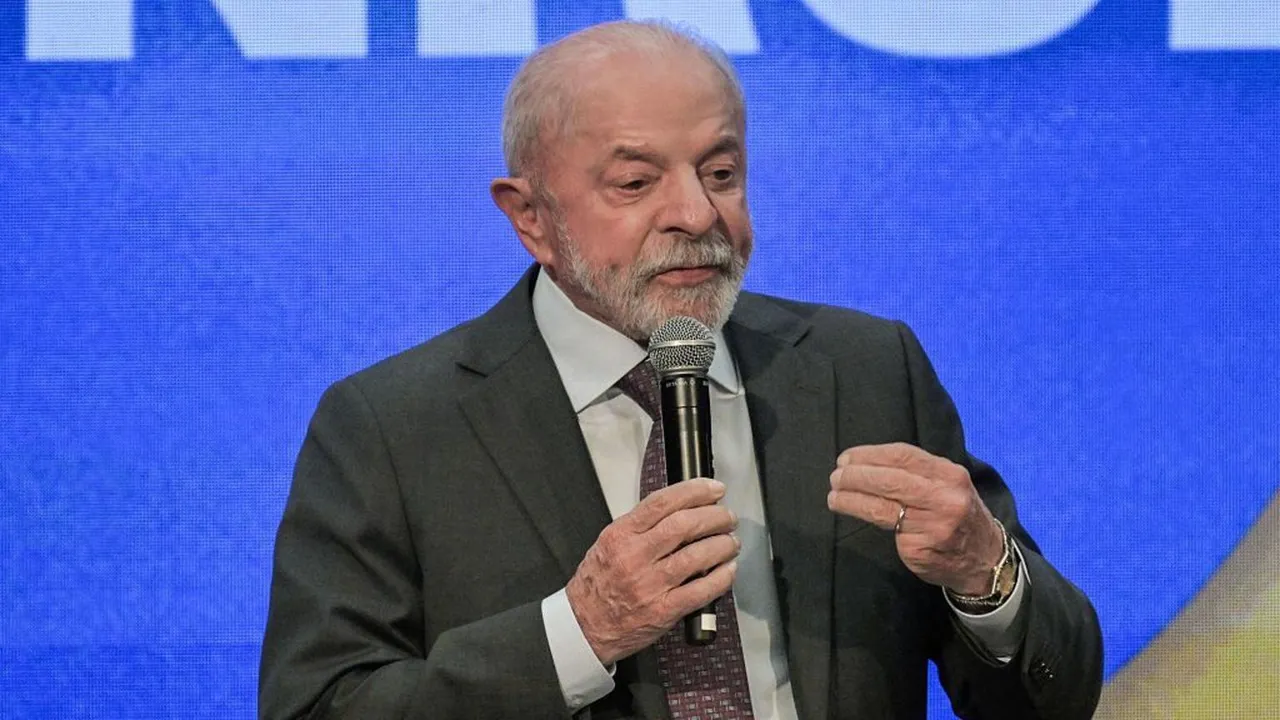
Brazilian President Luiz Inácio Lula da Silva has signed an order banning online gambling just over a week before the first round of the country's presidential election, describing the industry as a "cancer" threatening Brazilian families.
Lula signed the provisional order on Friday, which "prohibits all sports betting and online casinos." He also signed a separate bill to penalise criminal offences related to fixed-odds betting.
Online gambling was legalised in Brazil in 2018 and has since been blamed for widespread household income losses due to addiction. Lula said the industry had grown without adequate oversight and that families had been left in debt as a result.
"Either we remove the tumour, or it kills us," Lula said in his announcement. "We won't allow betting companies to profit at the expense of Brazilian families' income and lives."
The president acknowledged that online betting was introduced under former President Michel Temer but said it "grew without regulation under Bolsonaro's management." He also criticised the absence of restrictions preventing children and adolescents from accessing betting platforms.
Earlier this week, at the United Nations General Assembly in New York, Lula accused the industry of "transforming addiction into profit."
The new measures must receive congressional approval within 120 days to remain in force.
A survey by Atlas and Bloomberg published this week found that approximately 59.9 percent of Brazilian adults support banning internet betting.
The ban comes as Lula, 80, seeks a fourth term as president. He is running against Flávio Bolsonaro, the eldest son of incarcerated former President Jair Bolsonaro, who was sentenced to 27 years in prison after being found guilty of attempting a coup.
Recent polls show the two candidates nearly neck-and-neck ahead of the October 4 first-round vote.
Flávio Bolsonaro dismissed the gambling crackdown as "populist, hypocritical and politically motivated" during a campaign rally in Rio de Janeiro on Friday.
The election is drawing significant international attention. Brazil is one of the world's largest agricultural producers and holds vast reserves of natural resources, including rare earth elements, water resources, and crude oil.
Foreign policy has not featured prominently in the campaign, but analysts say the outcome will shape Brazil's international alignments. Lula advocates multilateralist diplomacy and has maintained Brazil's close trading relationship with China, its most important trading partner. He has resisted pressure from Washington while maintaining functional relations with the Trump administration.
Flávio Bolsonaro favours a conservative alliance with the United States and other right-leaning governments. Analysts note that a Bolsonaro presidency would likely put Brazil's role in BRICS under review. Bolsonaro has said one of his first acts would be to assess whether Brazil should remain in the alliance, arguing it serves only to antagonise the US. He has also spoken out against efforts to reduce the global dominance of the US dollar.
"While relations with the US would continue as they are with Lula, it is completely unclear what a Flavio Bolsonaro presidency would mean," former Brazilian diplomat and minister Rubens Ricupero said. "Lula has prestige in foreign policy, while Bolsonaro is completely inexperienced."
Leonardo Paz, from the Brazilian Fundacao Getulio Vargas think tank, said a Bolsonaro victory would not automatically guarantee improved relations with Washington, noting that Lula had established a largely functional relationship with the Trump administration despite some initial friction. Paz added, however, that Bolsonaro would be more likely to accommodate US demands, pointing to the far-reaching concessions his father made during his presidency from 2019 to 2023.