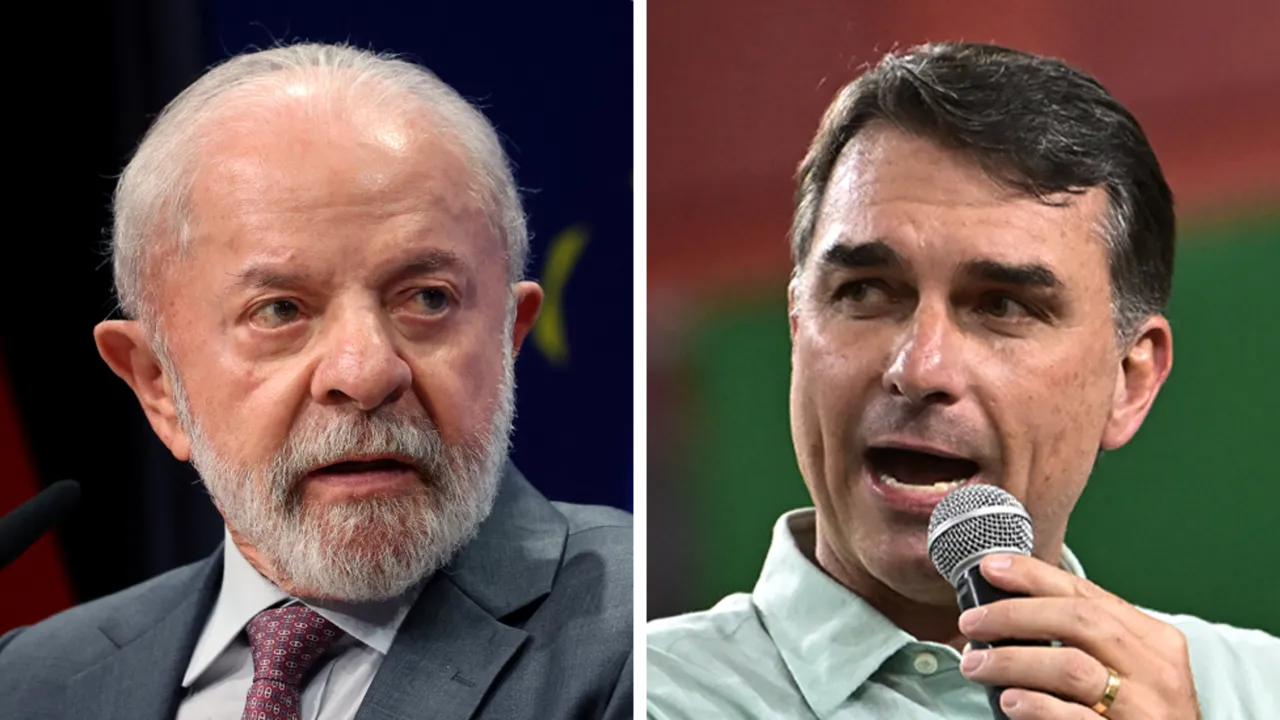
Brazilians are voting on Sunday in a general election in which the two front-runners for the presidency bear very familiar names. The incumbent, veteran left-wing leader Luíz Inácio Lula da Silva, faces 11 challengers, the most prominent of whom is right-winger Flávio Bolsonaro.
Both candidates made their final pitch to voters on Saturday, holding rallies in the pivotal state of São Paulo ahead of what polls suggest will be a closely contested race marked by scandals and mudslinging.
In the last election four years ago, Lula narrowly defeated Flávio Bolsonaro's father, Jair, by 1.8 percentage points. The tumultuous aftermath of that vote — which saw Jair Bolsonaro convicted of plotting a coup after thousands of his supporters stormed the Brazilian Congress — has had a lasting impact on the nation's political life and on this election.
Jair Bolsonaro, the right-wing former army captain who governed Brazil from 2019 to 2023, is not on the ballot this time. The 71-year-old is barred from standing for office and is serving a 27-year prison sentence for plotting a coup after his 2022 electoral defeat. Due to recurring health problems, he is currently under house arrest rather than in a cell, and has been prohibited from posting on social media or making public statements.
Despite those restrictions, his influence looms large over the campaign. At the event where Flávio Bolsonaro officially launched his presidential bid, an AI-generated avatar of Jair Bolsonaro appeared on screen to endorse his son's candidacy. When pressed by the Supreme Court about the deepfake, Jair Bolsonaro's lawyers denied he had given permission for its use. Nevertheless, there is little doubt that Flávio Bolsonaro carries his father's backing.
While 12 candidates are running for the presidency, only two have reached double figures in opinion polls: Lula and Flávio Bolsonaro. A poll tracker shows both hovering around the 40% mark, with Lula slightly ahead. The remaining 11 candidates are polling at 4% or less.
If no candidate secures more than 50% of valid votes in the first round on 4 October, the top two contenders will proceed to a run-off on 25 October. The polls strongly suggest a second round is likely. However, with a relatively high number of voters still undecided just days before the election, an outright first-round win cannot be entirely ruled out. At the end of September, 9% of voters were either undecided or planning to spoil their ballot, cast a blank vote, or abstain altogether.
Almost 160 million Brazilians are eligible to vote. Voting is compulsory for literate citizens between the ages of 18 and 70, with a fine imposed on those who fail to cast a ballot. Citizens aged 16 and older are entitled to vote.
Lula, 80, is the candidate of the left-wing Workers' Party and has already served as president three times. He held two consecutive terms from January 2003 to December 2010, during which he was widely praised for lifting millions out of poverty through a cash-transfer programme called Bolsa Família. He left office with approval ratings above 80%.
His party was later rocked by major corruption scandals. Lula himself spent more than 18 months in prison between 2018 and 2019 after being convicted of corruption and money laundering — charges he has always denied. Those convictions were annulled in 2021, allowing him to run in the 2022 election, which he won.
When he began his third term, Lula vowed it would be his last. His party nonetheless endorsed him as their candidate again this year.