Spain's parliament has voted down two emergency government decrees aimed at addressing the country's housing affordability crisis, dealing a significant blow to Prime Minister Pedro Sanchez's minority coalition government.
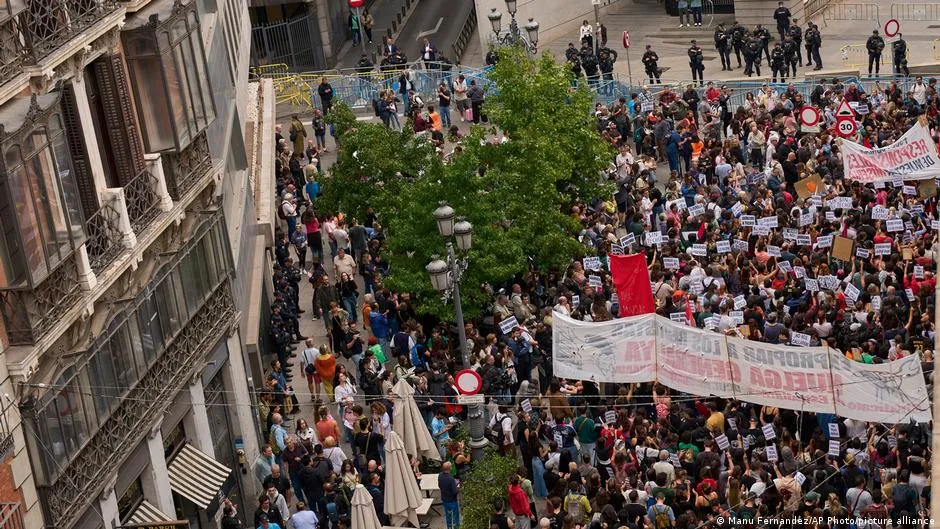
Both decrees were rejected by the 350-seat lower house, the Chamber of Deputies, on Friday following a marathon five-hour debate. Hundreds of protesters gathered outside parliament in Madrid during the vote, chanting "your profits, our misery" and "shame" as the results were announced.
The first decree, which aimed to stop evictions of vulnerable people, make real estate speculation harder, impose tighter restrictions on short-term leases, and provide tax incentives to encourage renting and housing construction, failed by a narrow margin of 178 votes to 172.
The second decree, which proposed making residential leases automatically renewable and effectively indefinite — with property owners required to pay tenants 12 months of rent to break a contract — fell further short of a majority, losing by 184 votes to 166.
The right-wing Catalan separatist party Junts, which sometimes supports Sanchez's government, joined the opposition in voting against both measures. The centre-right Popular Party and far-right Vox also voted against the decrees.
Junts lawmaker Miriam Nogueras argued the measures would lead to landlords withdrawing properties from the rental market, pushing prices even higher. "These decrees still allow speculators to buy property and to evict people," she said.
Sanchez, who leads a coalition composed of his Socialist Party and the far-left Sumar, appealed to lawmakers ahead of the vote. "Think about ordinary people, about those who most need the protection of public institutions. Think about the millions of young people who cannot afford to move out of their parents' homes. Think about the families living with the constant anxiety of ever-rising rents," he said.
Closing the debate, Sanchez urged members: "Do the right thing, because I believe that if you do not, history will judge you sooner than you think, and far more harshly than you can imagine."
The current wave of protests was triggered by the high-profile eviction of 87-year-old Madrid resident Maria del Carmen Abascal, known as Maricarmen, on September 23. Abascal had lived in her apartment in Madrid's central Retiro neighbourhood under a rent-capped lease contract originally signed by her father in the 1950s.
The property was purchased by real estate and investment firm Urbagestion in 2018. The company sought to terminate her contract after raising her rent from 500 euros to 2,650 euros per month — nearly double her monthly pension of 1,350 euros, according to reports. When police carried out the eviction on their fourth attempt, hundreds of activists were waiting outside. Abascal has since been offered a preliminary agreement that would allow her to return to her home.
Her case became a symbol of broader frustration over housing costs across Spain. "People have said 'enough is enough'; this cannot go on. The housing problem must be resolved; structural measures must be taken, and this cannot continue," Abascal's lawyer, Beatriz Duro, said in an interview on Thursday.
Protests have continued for around a week, including a tent encampment set up in central Madrid's Puerta del Sol square. Demonstrators held signs depicting vultures, denouncing real estate speculators they blame for driving up prices.
The Tenants' Union, which has led protests across Spain, said it would press ahead with plans for mass rallies on Saturday. "The encampment will continue and will continue expanding to other neighborhoods," spokesperson Alicia del Rio said. "We're aiming for a general strike."
The housing crisis has been building for years. Average rents in Spain have roughly doubled over the past decade. The average price per square metre rose from 8.20 euros in 2016 to 15.10 euros this year, according to real estate data. Young people, facing one of Europe's toughest labour markets for school-leavers and graduates, frequently live with their parents past the age of 30.
Opponents of the decrees argued the measures risked worsening the situation by reducing housing supply. Some also called on Sanchez to respond to the political deadlock by calling early elections. Sanchez has so far ruled that out. He could attempt to formulate new emergency decrees, but any such move would face the same obstacles in parliament.