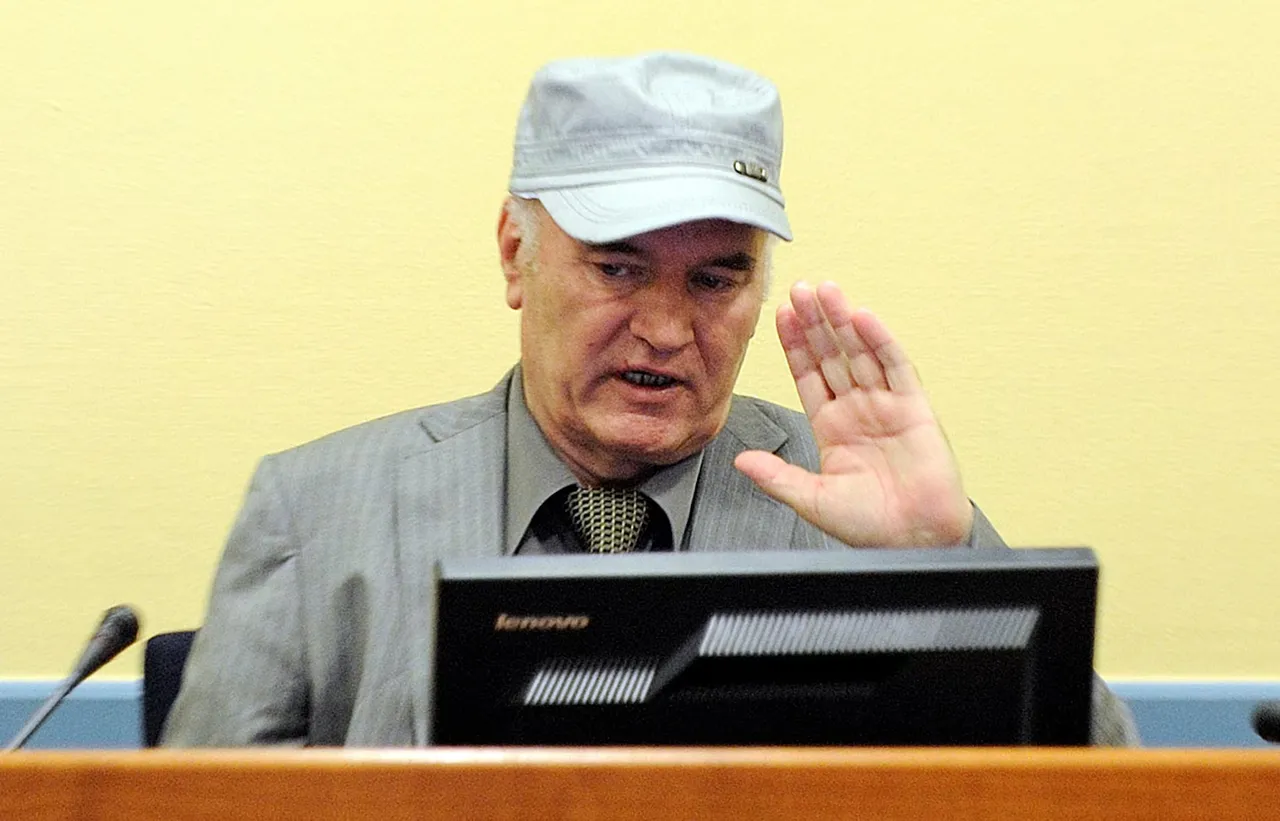
Ratko Mladic, convicted of genocide over the massacre of more than 8,000 Bosniak men and boys in Srebrenica, has died in prison in The Hague at the age of 84.
Known as the "Butcher of Bosnia", Mladic was one of the most notorious military commanders to emerge from the wars that followed the breakup of Yugoslavia.
Earlier this year, Serbia had requested that Mladic be allowed to receive medical treatment outside prison, describing his health condition as "serious" and stating that he "required serious medical treatment". The United Nations International Residual Mechanism for Criminal Tribunals said he was receiving adequate medical care while in detention.
International courts convicted Mladic of genocide, crimes against humanity and war crimes committed during the 1992-1995 war in Bosnia and Herzegovina. He was sentenced to life in prison.
The most notorious part of his criminal legacy is linked to the genocide in Srebrenica, in eastern Bosnia and Herzegovina, near the border with Serbia. Bosnian Serb forces under his command seized the town in July 1995, despite the UN having declared it a "safe area".
After the enclave fell, more than 8,000 Bosniak men and boys were killed in the days that followed. Some were captured and executed at locations in and around Srebrenica. Others were killed after attempting to flee through forests towards territory controlled by the army of the Republic of Bosnia and Herzegovina.
The bodies of victims were later discovered in numerous mass graves. The remains of around 1,000 victims are still being sought. International courts established that the killings constituted genocide.
Mladic was born in the village of Bozanovici, near Kalinovik, about 40 kilometres south of Sarajevo. He began his military career in the Yugoslav People's Army and gradually rose through its command structure.
When Bosnia and Herzegovina declared independence from Yugoslavia in the spring of 1992, Bosnian Serbs established their own political and military structures and proclaimed Republika Srpska. In May 1992, Mladic was appointed commander of its army.
Over the following three and a half years, he sought to seize parts of Bosnia and Herzegovina controlled by the army of the Republic of Bosnia and Herzegovina, including the capital Sarajevo. His forces failed, however, to achieve major territorial gains in several key areas.
Republika Srpska would formally become one of Bosnia and Herzegovina's two entities under the 1995 Dayton Peace Agreement.
In addition to the Srebrenica genocide, international courts found Mladic responsible for a campaign of terror against Sarajevo's civilian population and the hostage-taking of UN peacekeepers, among other crimes.
Sarajevo was surrounded by Bosnian Serb forces for almost 44 months. From positions on the surrounding hills, they shelled the city and deployed snipers against its residents. More than 11,500 people from all ethnic groups were killed, while many others were wounded or displaced. The siege, which Mladic directed, became one of the longest sieges of a capital city in modern history.
After the war ended in 1995, Mladic evaded arrest and spent almost 16 years in hiding, becoming one of Europe's most wanted fugitives. He was arrested in Serbia in May 2011 in the village of Lazarevo, near Zrenjanin, at the home of a relative. Several days later, he was transferred to The Hague, where his trial began before the International Criminal Tribunal for the former Yugoslavia.
His arrest had been one of the key conditions set by the international community for Serbia's progress toward closer ties with the European Union. Belgrade faced political and financial pressure from Western countries to cooperate with the tribunal. In 2017, the tribunal sentenced him to life imprisonment.
Although his convictions were final, Mladic continued to command support among sections of the Serbian public and political circles in Serbia and Bosnia and Herzegovina. Murals depicting him remain visible in Banja Luka, Belgrade and other areas with predominantly Serb populations. Some members of the public continue to portray him as a military hero rather than a convicted war criminal.
Denial of the Srebrenica genocide and the glorification of convicted war criminals remain serious problems in Bosnia and Herzegovina. According to data from the Srebrenica Memorial Centre, 149 cases of public denial of the genocide were recorded in the first quarter of 2026, including statements by public figures. That represents an increase compared with 2025, when 99 such cases were recorded.
The UN General Assembly adopted a resolution in May 2024 establishing July 11 as the International Day of Reflection and Commemoration of the 1995 Genocide in Srebrenica. The resolution was intended to preserve the memory of the victims, promote a culture of remembrance and reaffirm the importance of confronting genocide denial.