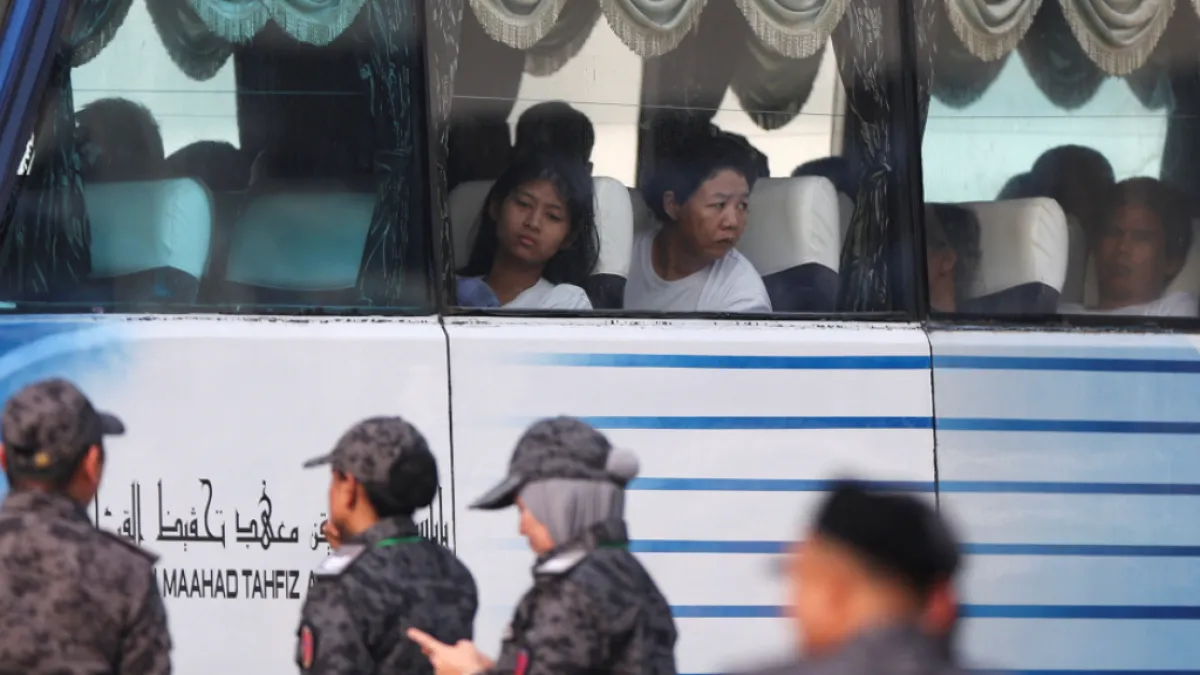
Buses escorted by security vehicles carrying migrants arrived at a stadium near Malaysia's Lumut naval base on Tuesday, marking the start of the first phase of a repatriation process agreed between Malaysia and Myanmar's military regime.
The operation involves the return of as many as 5,000 people to the conflict-torn country. Malaysia's Home Ministry had announced in late August that the first phase would begin in September, covering 1,476 Myanmar citizens identified by the Myanmar government.
Two naval vessels and a hospital ship were docked at the base, appearing ready to transport the group by sea.
Malaysia says the process is strictly voluntary. However, the United Nations refugee agency and civil society organizations have raised serious concerns about the safety of those being returned, warning they could face military recruitment, persecution, or detention amid an ongoing civil war.
The UN High Commissioner for Refugees (UNHCR) stated that current conditions "do not support the safe and sustainable return of refugees from Myanmar." The agency also said it had not been involved in the agreement struck between Malaysia and Myanmar.
UNHCR data indicates that approximately 193,000 refugees from Myanmar are currently in Malaysia, with around two-thirds of them being Rohingya Muslims.
Activist James Bawi Thang Bik said that based on accounts from refugees previously deported, those returning risk detention or forced military conscription.
"We fear that they may be forced to fight on the frontlines of the conflict. For many it is akin to sending them to a death sentence in their own home," he said.
Myanmar has been in deepening turmoil since a 2021 military coup triggered a civil war, with the armed forces now fighting on multiple frontlines against various armed groups. Allegations of persecution and ethnic cleansing of the Rohingya Muslim minority predate the full-scale civil war, and some regional conflicts in the country have been ongoing for decades.
Myanmar's state media cited the country's Foreign Ministry as saying it was working with other nations to facilitate the voluntary return of verified displaced persons "in a safe and dignified manner."
Malaysia has tightened immigration enforcement in recent years amid rising local hostility toward refugees, particularly Rohingya Muslims. A wave of online agitation earlier this year further amplified harassment and scrutiny of the Rohingya community within the country.
Malaysian Prime Minister Anwar Ibrahim said this month that he would invite Myanmar's military chief turned president, Min Aung Hlaing, for an official visit in exchange for accepting the returnees.
Myanmar's largely ostracized government, which ousted former President Aung San Suu Kyi five years ago, has been seeking greater acceptance from the international community.