Rescuers in Nepal and China are racing to locate thousands of people still missing after catastrophic flooding, as search operations enter their 12th day.
The flooding, which authorities say was likely caused by a glacial collapse last month, has killed at least 1,384 people across the two countries and left more than 5,500 missing, including around 800 foreigners.
In Nepal, rescue teams have retrieved 1,341 bodies and are searching for approximately 4,996 people, the national disaster agency said on Sunday. In Tibet, the death toll has risen to 43, with 519 people still missing, according to Chinese state media.
Four people have been found alive since Friday, three of them inside tunnels at hydropower facilities, where the government had initially estimated that around 100 people could still be alive.
Nepal's Energy Minister Biraj Bhakta Shrestha said teams working at flooded hydropower tunnels are facing severe obstacles. "Search and rescue is going on at the tunnels despite geography, adverse weather and lack of connectivity," he said.
On the Chinese side, rescuers are contending with deep mud, poor weather and the risk of further landslides, all of which have slowed operations in a narrow gorge. Nothing remains of a five-storey customs building at Gyirong, once China's main land port with Nepal. Workers are digging with shovels, excavators and ground-penetrating radar in an effort to recover victims. The only road into Gyirong reopened on Wednesday, allowing heavy equipment to reach the site.
Nepal has formally invoked an untested climate emergency mechanism, requesting that the United Nations-backed Fund for Responding to Loss and Damage help cover some of the disaster's costs. The fund was established in 2022 to assist developing countries particularly vulnerable to the adverse effects of climate change.
The United Nations has appealed for $50 million to help more than 84,000 people, describing the scale of destruction as making aid delivery an immense challenge.
On Wednesday, Nepal's Foreign Minister Shisir Khanal pointed to the role of leading greenhouse gas emitters, saying they bear a "historical responsibility to compensate vulnerable nations like Nepal." The government has officially filed a "formal climate compensation claim letter" to international partners, he added.
While the exact cause of the glacial collapse remains under investigation, experts say the frequency and scale of such floods have increased as global temperatures have risen. A United Nations study found that glacial floods have become nearly five times more frequent since 1950.
Manjeet Dhakal, lead adviser to the UN Least Developed Countries Group on Climate Change, said the global community has a responsibility to cover the cost of disasters affecting developing nations and that the fund should accept Nepal's request. Countries struck by such disasters are being forced to divert money set aside for health, education and development, he said.
"There are many cases where vulnerable countries are bearing their own cost," Dhakal said. The flood was "not caused because of what Nepal has done in the past or in current form," he added. "That's where the global community has a bigger responsibility to come in."
The fund has received only around $631 million of the $822 million pledged by contributing states since its inception and has yet to disburse any of that amount. Dhakal said that even a "symbolic amount" could serve as an "inspiring lesson for the fund to justify what it was established for."
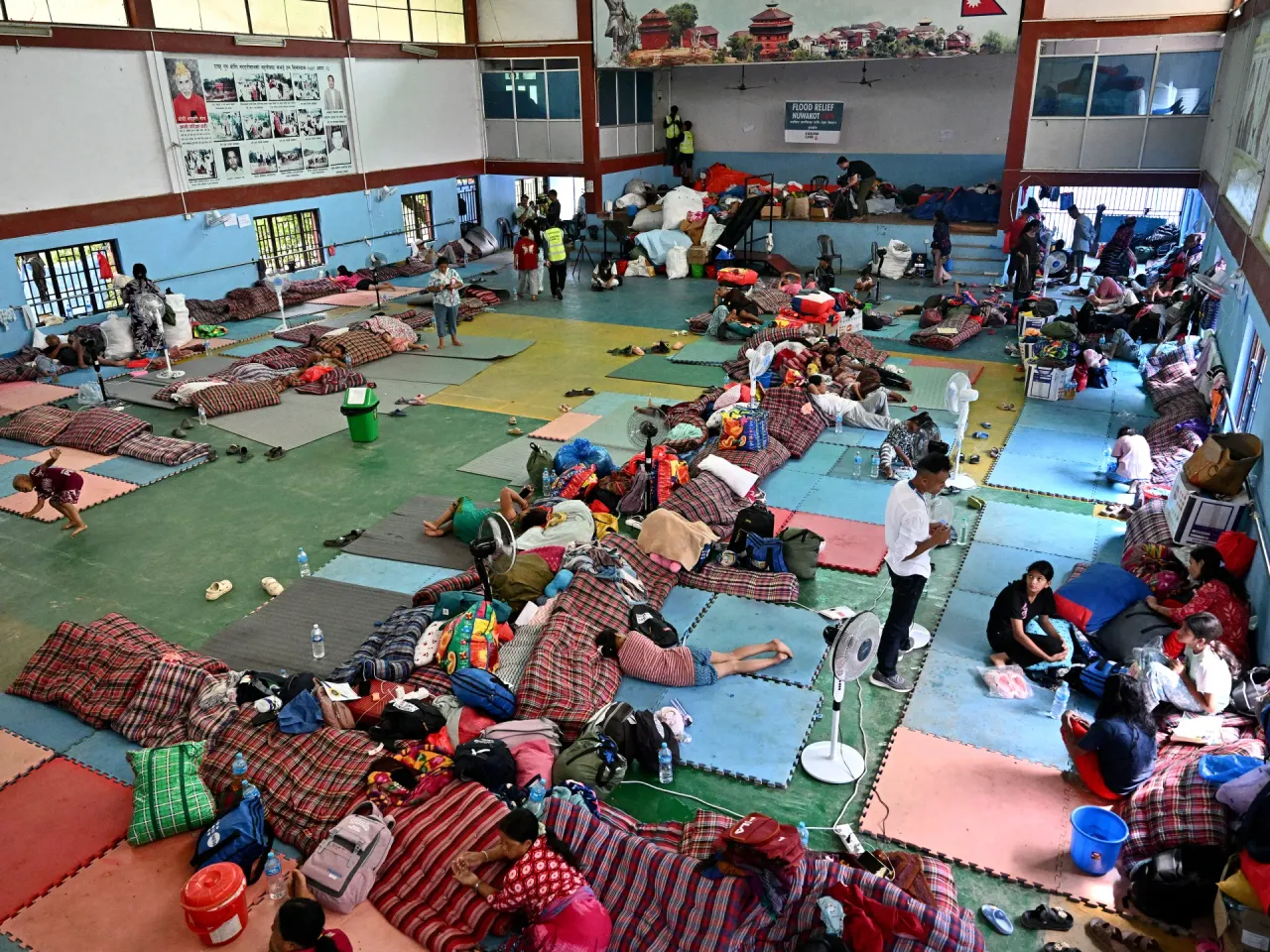
At a Buddhist monastery in Kathmandu that has been converted into a shelter, around 200 people were brought in by helicopter. Doctors and volunteers have been attending to survivors at the site, known as the Yellow Monastery. Reporters at the scene described people meditating, praying and children present, but noted that many had lost family members, homes and parents in the disaster.