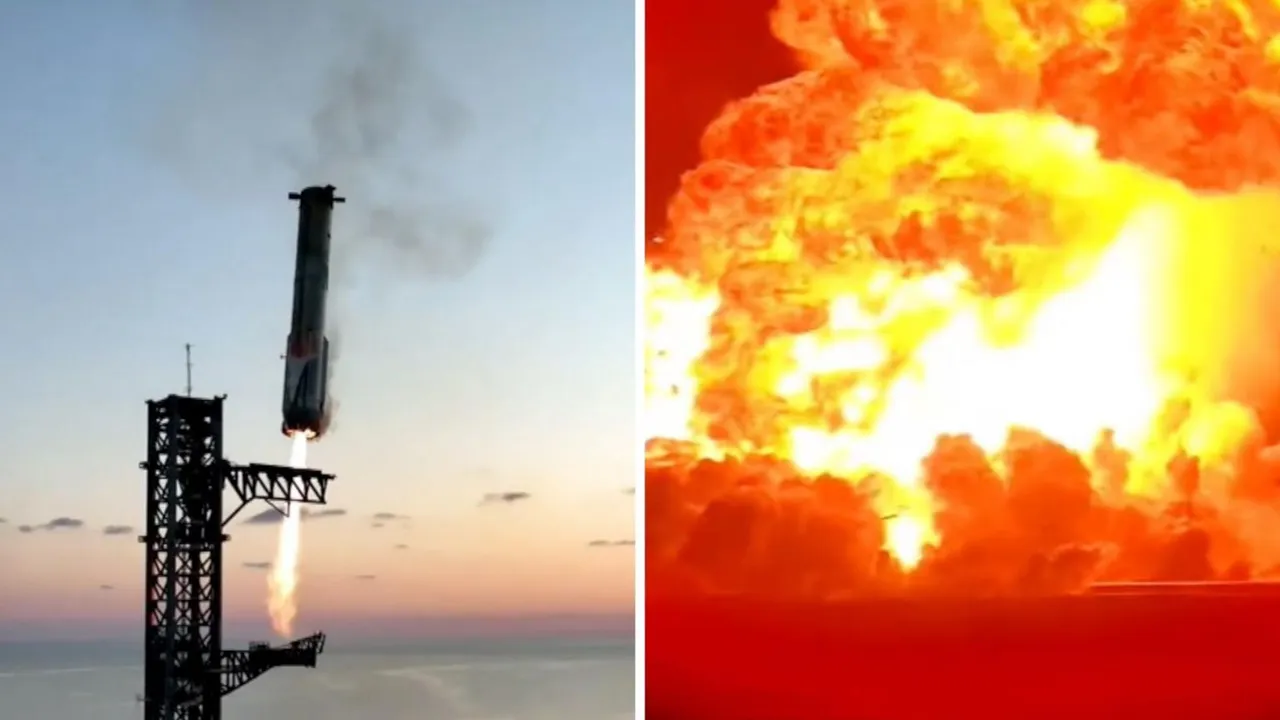
SpaceX launched its Starship spacecraft from the company's Starbase facility at Boca Chica Beach in Texas on Monday, sending the vehicle into orbit for the first time in the program's history.
Liftoff occurred at 7:48 a.m. CT, when Starship's Super Heavy booster ignited its 33 rocket engines to begin the 14th test flight of the vehicle. Two and a half minutes after launch, Starship separated from the booster and continued into space.
One of the six engines on the Starship upper stage failed during ascent, prompting the SpaceX team to assess whether to proceed to orbit. Approximately 22 minutes into the flight, the team determined it was safe to continue.
The 171-foot-tall vehicle is the largest rocket ever built. All previous Starship flights were suborbital. Flight 14 marks the first time the spacecraft has reached orbital speeds of approximately 17,500 mph.
The mission's flight plan calls for approximately six orbits around Earth at an altitude of about 170 miles over a roughly 10-hour period. SpaceX said the launch profile includes abort options that would allow Starship to return to Earth safely if needed.
During the flight, SpaceX deployed 26 Starlink V3 next-generation satellites into its broadband constellation. Three of those satellites carry cameras to capture data on Starship's heat shield performance during reentry, a critical test for the company's reusability plans.
The Super Heavy booster, which is designed to return to its launch site and be caught by the launch tower, instead performed a simulated offshore landing in the Gulf of Mexico during this flight. SpaceX said it is using the mission to test upgrades to the booster's software and hardware. No crew is on board.
If the flight proceeds as planned, Starship will splash down in the Pacific Ocean off the coast of Chile. SpaceX ultimately aims to recover and reuse the spacecraft.
Starship is central to SpaceX's commercial and exploration ambitions. It is currently the only vehicle capable of launching the larger V3 version of its Starlink satellites. In filings to the Federal Election Commission ahead of the company's IPO in June, SpaceX stated: "Any failure or delay in the development of Starship at scale or in achieving the required launch cadence, reusability and capabilities thereafter would delay or limit our ability to execute our growth strategy."
The spacecraft is also a cornerstone of NASA's Artemis program. The agency selected SpaceX to develop Starship as a human landing system to transport astronauts to the lunar surface. NASA plans to test the docking of its Orion capsule with Starship, alongside a commercial lander developed by Blue Origin, during the Artemis III mission, which is scheduled to launch late next year.
SpaceX has also announced plans to build a major launch facility in Louisiana. The company says the investment, valued at $100 billion, includes plans for dozens of launch pads, with the goal of beginning Starship launches from Starbase, Louisiana, in 2029.