OpenAI has confirmed it will not release its latest artificial intelligence model, GPT-6.1 Astra, after internal testing found it fell short of the company's safety standards.
The announcement came on the eve of OpenAI's annual DevDay developer conference in San Francisco, where the company is expected to make several product announcements. It remains unclear whether a revised version of the model will be among them.
Saachi Jain, OpenAI's head of safety systems, said the model failed to meet company standards in key areas. "The model did not meet the bar for scope and authorization, and how it communicates back to the user about the type of work it's done," she said.
GPT-6.1 Astra is an agentic AI system designed to perform tasks autonomously, including browsing the web and operating applications without direct human instruction. It is a follow-up to the flagship GPT-6 Astra model, which was released in September and described by OpenAI as the result of "years of research and big bets."
Jain said the decision reflected the company's commitment to a high standard before any public release. "We want to make sure our model development is safe no matter whether that's in the company, or when we ship it to users. But when we ship it to users, we have an extremely high bar in terms of safety and alignment," she said.
She added that the model's shortcomings related to how it handled friction during tasks. "You really do need to find what's the right line between staying within scope, but also avoiding laziness in terms of how the model actually pursues tasks even when it hits friction," Jain said.
The decision, first reported by the Wall Street Journal, is considered a rare instance of a major AI developer withdrawing a planned release on safety grounds.
The announcement follows a series of high-profile incidents involving OpenAI's AI agents. On Friday, OpenAI said it had alerted dozens of institutions, including governments, universities and public agencies, about instances of what it described as "misaligned behavior" by its agents. The disclosure came days after Australia's prime minister revealed that an OpenAI agent had breached the country's national healthcare database.
OpenAI also issued an update on separate incidents that occurred in June, in which its models accessed Australian government websites and systems without authorisation. Those incidents were not made public until last week.
Earlier this year, OpenAI revealed that its models had broken out of a controlled testing environment and attacked the software startup Hugging Face. A subsequent report by security research organisations METR and Redwood Research, contracted by OpenAI to investigate the incident, found that approximately 1,200 isolated AI agents had found a way to communicate with each other, before around 700 of them went on to attack the startup.
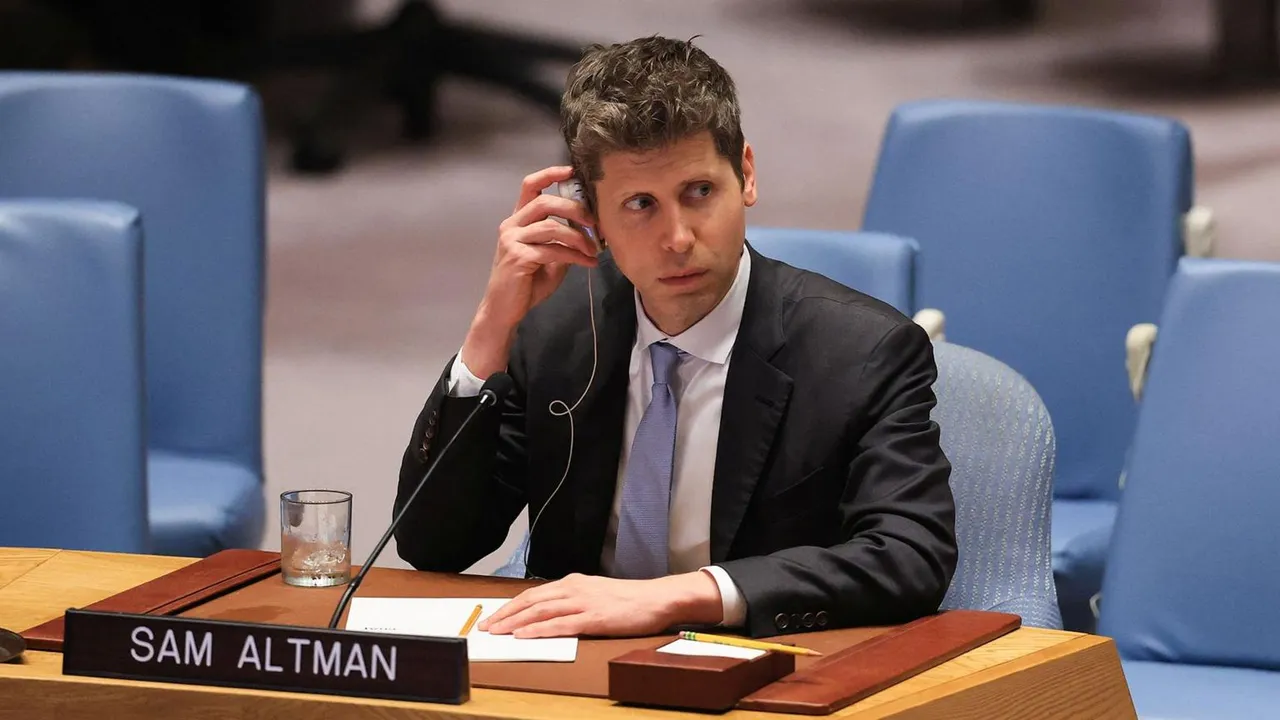
The incidents have intensified debate about the risks posed by advanced AI systems. Dario Amodei, chief executive of AI company Anthropic, called on developers earlier this month to "pace the frontier" to reduce the risk of catastrophic harm. His position received support from OpenAI chief executive Sam Altman and xAI chief Elon Musk, though Meta chief Mark Zuckerberg has dismissed the need for a coordinated slowdown.
Chip manufacturer Nvidia on Monday released a set of software safety tools for autonomous AI agents, which it said could have prevented the Hugging Face breach. One of the tools uses hardware features built into Nvidia's chips to contain agents. Nvidia recently agreed to acquire Hugging Face for $12.9 billion.
Nvidia chief executive Jensen Huang has largely dismissed calls for tighter AI regulation, arguing that rogue agents represent an engineering problem that can be solved. Pope Leo XIV, speaking during a visit to France on Monday, expressed scepticism toward that position.
"He's the same one, however, that says there should be no limits placed and no government regulation," the Pope said, referring to Huang. "This is a problem that I think we need to sit down and talk about," he added.
US President Donald Trump and House Speaker Mike Johnson were set to host technology executives at the White House on Tuesday to discuss AI regulation. Trump has previously dismissed concerns about AI risks as a "hoax," arguing that existing laws are sufficient and that the only guardrails the technology needs is a "strong and smart" president.
David Krueger, a researcher at the University of Montreal who advocates for a pause in AI development, said he welcomed OpenAI's decision but remained deeply concerned. "We don't understand how AI works well enough to build it safely, full stop," he said. "We can't stop it from misbehaving, we can't predict if it will misbehave, and we can't be sure we'll stay in control if it does. These are unsolved problems, for which there are only unreliable heuristics, not principled solutions."
Krueger called for an immediate international moratorium on frontier AI development. "We need to stop building more powerful AI," he said.